Boma Yangu Expands Housing and Markets to Support Small Traders

The government’s Boma Yangu Affordable Housing Programme is rolling out housing and market infrastructure simultaneously, targeting improved working conditions for small-scale traders.

The programme aims to deliver 250,000 housing units annually across all 47 counties, alongside the development of modern markets and trading centres.

At least 400 modern markets are planned nationwide. More than 237 Economic Stimulus Programme (ESP) markets and 39 additional markets are currently under development across over 200 constituencies.

These facilities are designed to provide traders with permanent, structured spaces, replacing informal setups that expose businesses to weather, insecurity and inconsistent operations.

Access to fixed market spaces allows traders to operate more consistently, manage stock better and maintain stable customer access.

The informal sector, which supports millions of livelihoods, is expected to benefit from improved working conditions and reduced business disruptions.

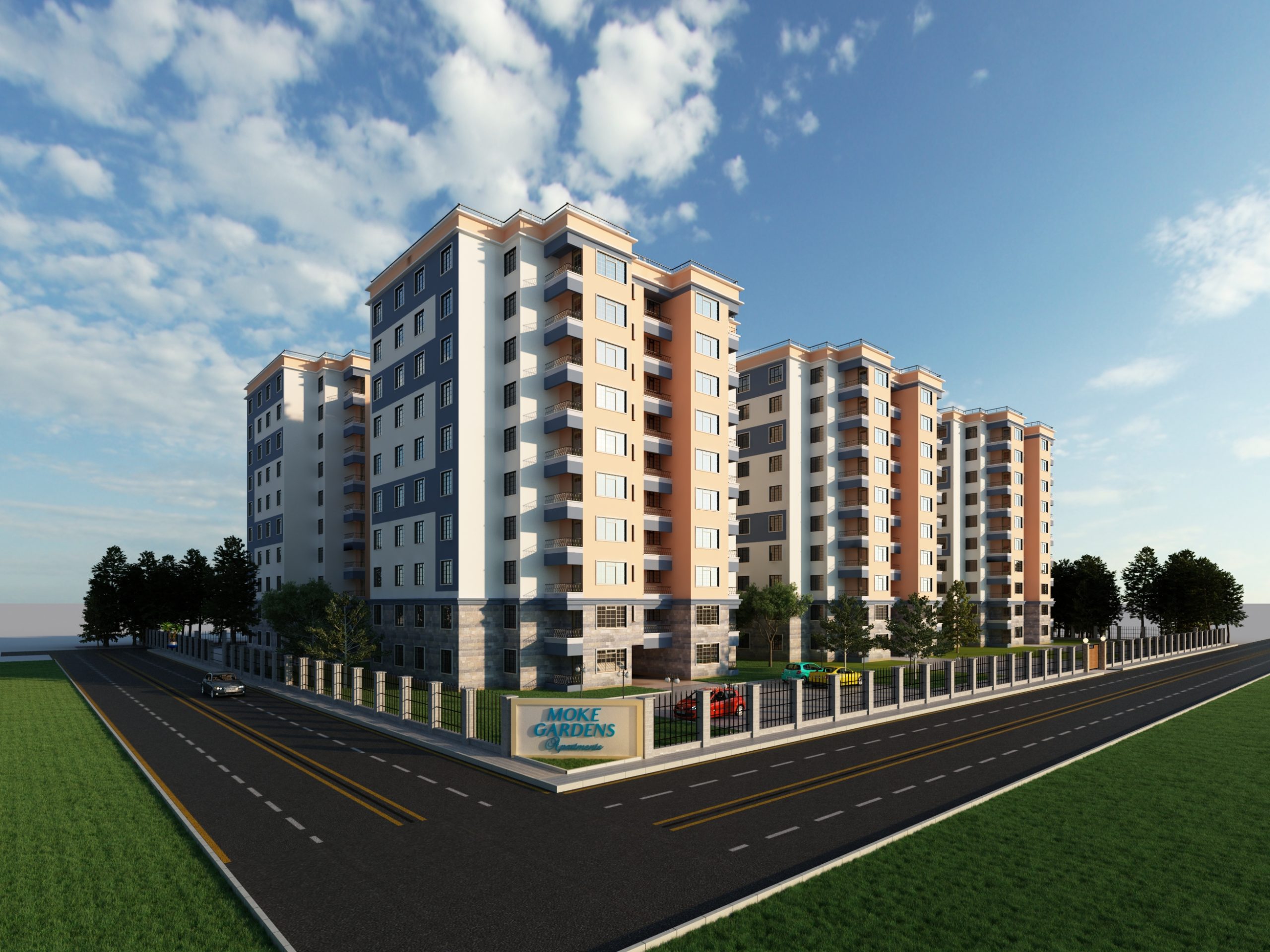
An artist’s impression of an Affordable Housing project (Image: Files)

The programme integrates markets within residential developments to create localised economic activity and reduce commuting costs.

By clustering traders in organised spaces, the markets are expected to strengthen local supply chains and support small business growth.

Housing and market projects are ongoing across multiple counties, with outcomes expected to be measured through improvements in trader income, stability and business growth.

Makongeni: Making History in The Eastlands Urban Renewal Plan

Makongeni is the first beneficiary in the documented, structured, community-led process that now marks the transformation under the Eastlands Urban Renewal Masterplan (2016–2036).

For the first time since the vision was adopted in 2019, an old Nairobi estate is moving from blueprint to bulldozers, from aging blocks to a modern neighbourhood shaped with its residents at the centre.

Makongeni was chosen for her strategic location, long-standing congestion challenges, and the potential to anchor a new, green Eastlands.

A Systemic Relocation

What sets Makongeni apart is not just the scale of redevelopment – it’s the process.

The relocation has become one of the most documented and people-centred exercises ever done under the Affordable Housing Programme.

The Relocation Action Plan wasn’t a formal requirement ticked off; it became the backbone of the transition.

Key processes included:

  • Enumeration that mapped official tenants, sub-tenants, traders, churches and more – creating a factual base for all decisions.
  • Verification that honoured lived realities through IDs, rent records, testimony and official letters.
  • Grievance handling that resolved over 300 complex cases through a multi-agency desk involving elders and local leadership.
  • Tracing efforts that ensured no household was left behind – including sick, travelling or fearful families.
  • Clear communication through Swahili, Sheng, SMS, barazas, meetings and home visits.
  • Voluntary movement, supported only after disbursement of facilitation funds and signing of consent forms.

To date, more than 4,600 verified households and commercial spaces have been supported to move with clarity and dignity.

The Importance of Movement & Timing

Makongeni cannot be rebuilt while families still live on site. Roads, parks, housing blocks, water systems and commercial centres can only rise once the ground is clear.

The timing is deliberate:

  • Families needed time to plan before schools reopen in January.
  • December’s festive season brings higher rents and fewer available houses.
  • Facilitation funds have a clear usage window to avoid strain or misuse.
  • Construction work must begin soon for residents to return sooner.

This period marks the bridge between the old Makongeni and the future one – a shift from years of planning to physical progress on the ground.

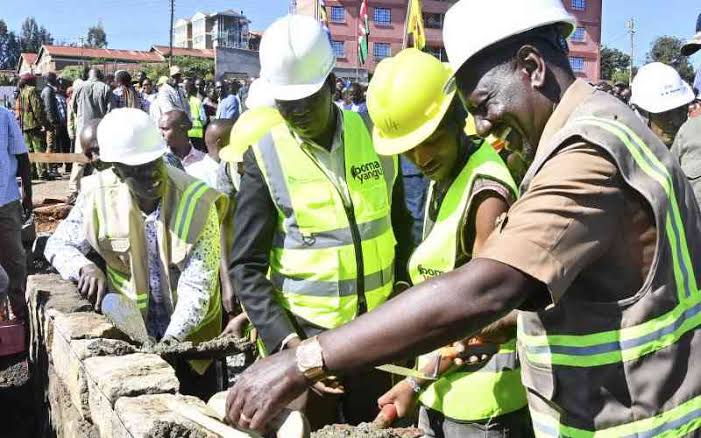
President Ruto greets the youths during a recent Affordable Housing launch in Siaya (Image: Files)

The Sights of the New Makongeni

The new Makongeni will sit on 139 acres acquired from the Kenya Railways Staff Retirement Benefits Scheme.

The redevelopment will deliver:

A homely neighbourhood

Homes, schools, clinics, parks, and markets within walking distance – aligned with the New Urban Agenda’s push for dignity, convenience and community.

Mixed-density homes

75 acres of social, affordable and affordable-market housing built with modern architecture and climate-resilient standards.

New economic engine for Eastlands

Commercial streets, co-working spaces, small industries, and thousands of jobs during and after construction.

Learning and wellness hub

Early childhood centres, primary and secondary schools, a vocational institute, and a modern community health complex.

Green spaces

20 acres of parks, playfields, green corridors, and public recreation – the largest green investment in Eastlands in decades.

Futuristic infrastructure

New roads, mobility hubs, stormwater systems, water and sewage treatment plants, and solar fields.

The Future of Makongeni

This redevelopment isn’t about demolitions – it’s about dignity, opportunity and continuity.

Residents will have priority to return and purchase units, keeping Makongeni’s generational story alive even as the surroundings transform.

Makongeni is where Eastlands’ next chapter begins – not by erasing the past – but by upgrading and building a future worthy of its people.

Myth Buster: Seven Hard Truths to Know about The Affordable Housing Program

Kenya’s Affordable Housing Program has been a cornerstone of the government’s economic transformation agenda, yet it remains shrouded in myths and misconceptions.

As the nation grapples with a housing deficit of 200,000 units annually, this initiative aims to bridge the gap by providing decent, safe, and affordable housing for citizens.

Let’s uncover the truth behind the common myths surrounding this ambitious program.
Myth 1: “The government is stealing from us through the housing levy tax.”

Truth:

The National Housing Levy, established under the Affordable Housing Levy Act of 2024, is managed transparently by the National Housing Fund.

This fund, overseen by the Affordable Housing Board under the State Department of Housing and Urban Development, ensures that every cent is accounted for.

While the levy doesn’t guarantee home ownership, it supports infrastructure development and subsidizes housing construction costs.

Myth 2: “Affordable homes are not so affordable.”

Truth:

The program caters to diverse income levels through three distinct categories:

• Social Housing: For low-income households.
• Affordable Housing: For middle and lower-middle-income earners.
• Market Housing: For higher-income earners.

This segmentation ensures that no one is left behind.

Myth 3: “The government is constructing these homes.”

Truth:

The Affordable Housing Program leverages Public-Private Partnerships (PPPs). The government provides land, bulk infrastructure, and tax incentives, while private developers finance and construct the homes.

This collaboration boosts economic growth while ensuring efficiency in project execution.

Myth 4: “Projects are only within Nairobi County.”

Truth:

Affordable housing is a nationwide initiative. Active projects are ongoing in 37 counties, including Bungoma, Nanyuki, Mombasa, Nakuru, and Nyeri.

The aim is to decentralize development and ensure every Kenyan has access to affordable housing.

Myth 5: “The housing levy directly contributes to owning an affordable housing unit.”

Truth:

While the levy supports the Affordable Housing Program, it doesn’t translate into automatic homeownership.

To own a home under this initiative, individuals must register on the Boma Yangu portal and start contributing. The levy funds broader infrastructure and development, creating an enabling environment for housing projects.

Myth 6: “My personal information isn’t safe and might be leaked.”

Truth:

Data privacy is a priority for the Boma Yangu platform, which adheres to the Kenya Data Protection Act of 2019.

Personal information is transmitted securely and handled with robust physical, electronic, and administrative safeguards to prevent breaches or misuse.

Myth 7: “These houses are reserved for senior government officials.”

Truth:

The allocation process is transparent and fair, guided by strict criteria. Every registered Kenyan is eligible, and individuals can only benefit once.

Factors such as family status, the amount saved, and demand across housing categories determine priority. No special privileges are extended to government officials.

Affordable Housing in Action

The Affordable Housing Program is a testament to Kenya’s commitment to addressing the housing crisis.

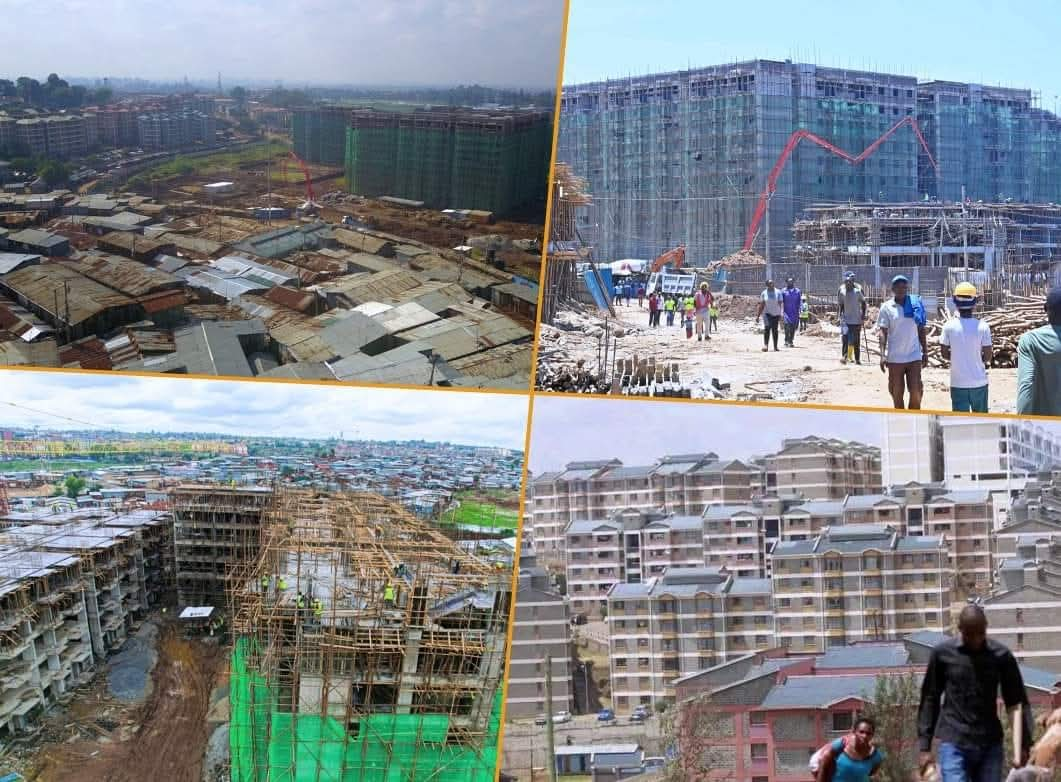
With 124,000 units at various stages of development and 75 active construction sites nationwide, the program is scaling up rapidly.

Over the next four years, it targets delivering an additional 730,000 units, narrowing the housing deficit significantly.

Beyond homeownership, the program boosts job creation and supports small and medium-sized businesses by stimulating demand and supply in the construction sector.

It also fosters economic growth through PPPs, showcasing how strategic collaboration can achieve national goals.

Start Your Homeownership Journey Now

Misinformation shouldn’t hold you back from owning your dream home. Kenya’s Affordable Housing Program is more than bricks and mortar – it’s about empowering citizens and transforming communities

Register today on Boma Yangu at www.bomayangu.go.ke or dial *832# to begin your journey toward affordable homeownership.