The government’s Boma Yangu Affordable Housing Programme is rolling out housing and market infrastructure simultaneously, targeting improved working conditions for small-scale traders.
The programme aims to deliver 250,000 housing units annually across all 47 counties, alongside the development of modern markets and trading centres.
At least 400 modern markets are planned nationwide. More than 237 Economic Stimulus Programme (ESP) markets and 39 additional markets are currently under development across over 200 constituencies.
These facilities are designed to provide traders with permanent, structured spaces, replacing informal setups that expose businesses to weather, insecurity and inconsistent operations.
Access to fixed market spaces allows traders to operate more consistently, manage stock better and maintain stable customer access.
The informal sector, which supports millions of livelihoods, is expected to benefit from improved working conditions and reduced business disruptions.
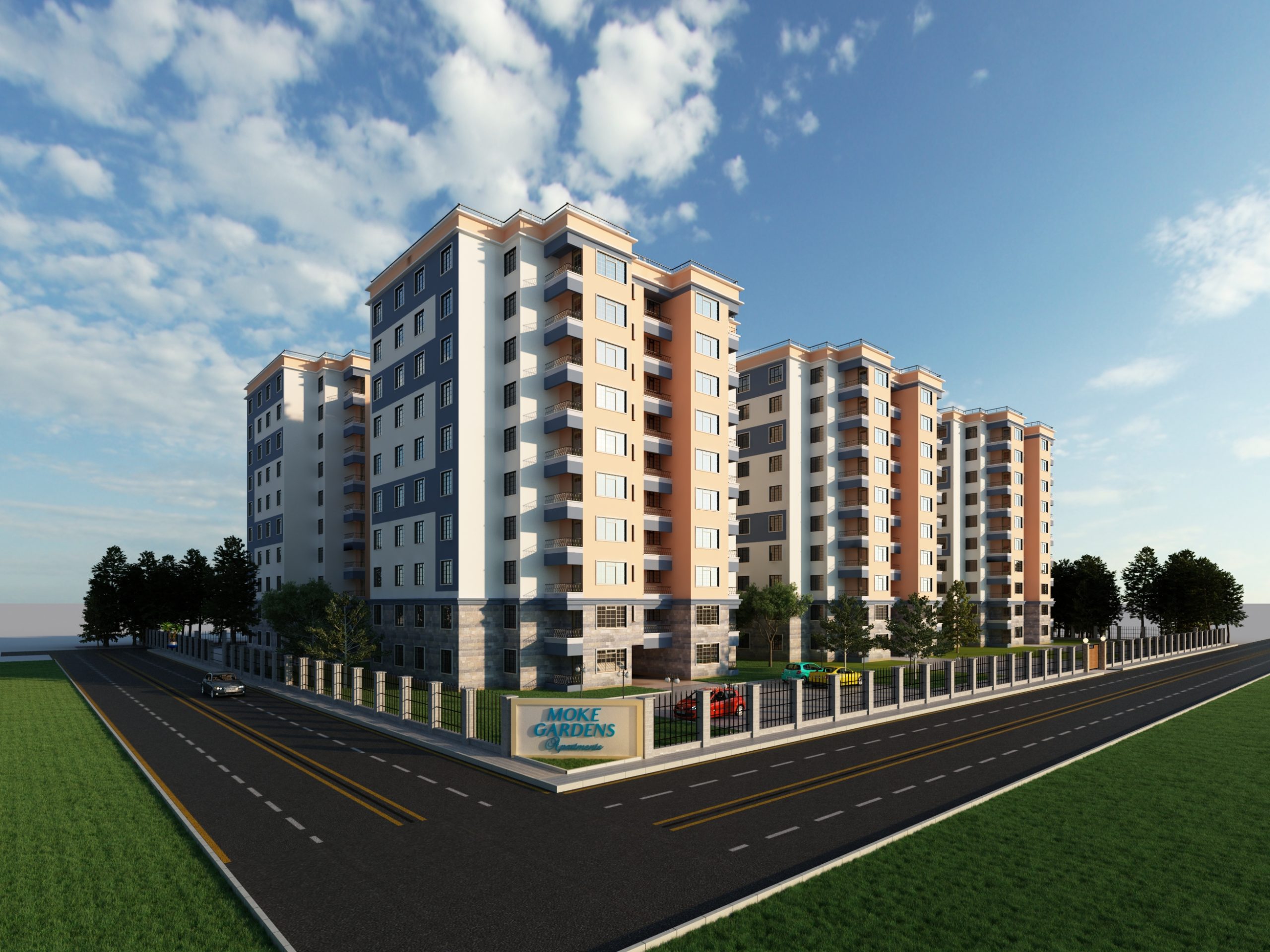
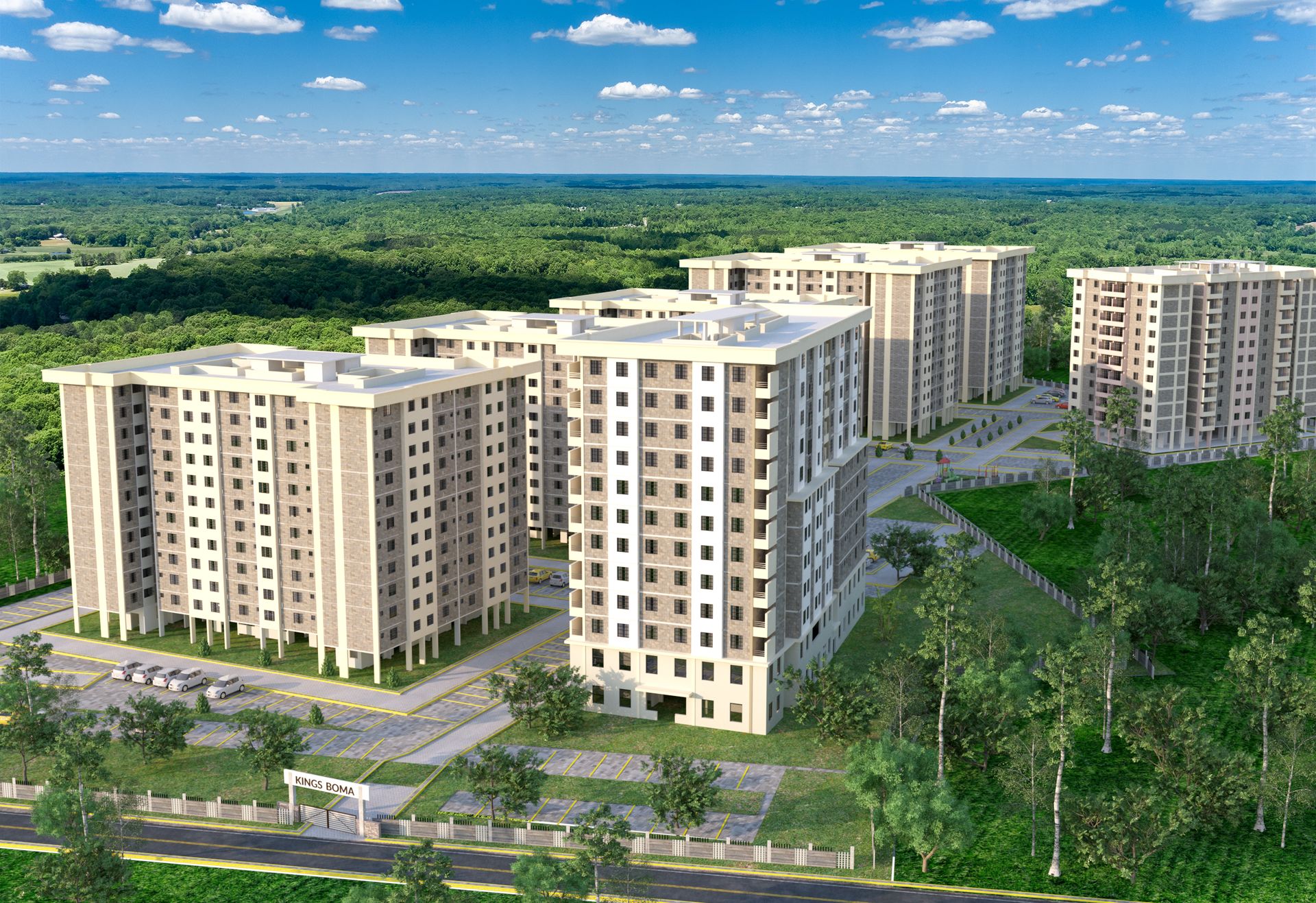
An artist’s impression of an Affordable Housing project (Image: Files)
The programme integrates markets within residential developments to create localised economic activity and reduce commuting costs.
By clustering traders in organised spaces, the markets are expected to strengthen local supply chains and support small business growth.
Housing and market projects are ongoing across multiple counties, with outcomes expected to be measured through improvements in trader income, stability and business growth.
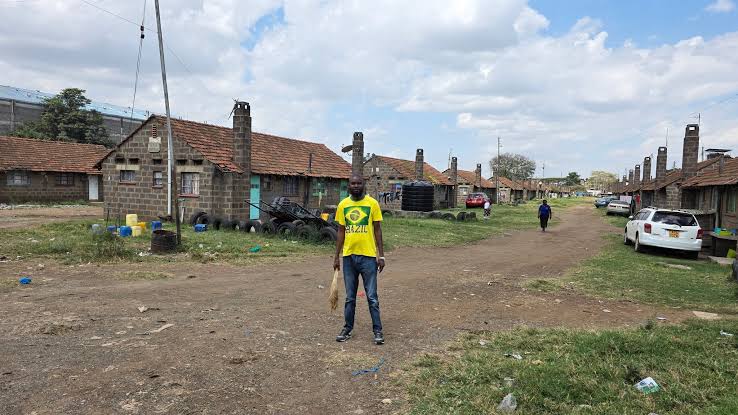
Makongeni is the first estate to actualise the Eastlands Urban Renewal Masterplan, a project that represents a shift in how Kenya handles redevelopment.
It’s a structured process with full documentation, and a community-led transition where every voice is heard and no household is left behind.
Government agencies describe the Makongeni process as the most people-centred engagement exercise in the Affordable Housing Programme’s history.
It’s designed to protect residents, safeguard pensioners, and prepare the estate for rebirth as a modern, green, connected community.
Here are 15 facts that reflect the uniqueness of the project:
1. Extensive Consultation
Records show Makongeni has undergone multiple rounds of structured engagement, including barazas, door-to-door visits, enumeration, verification, grievance redress sessions, Relocation Action Plan (RAP) workshops, and consent signing.
Every step was documented, capturing household details, concerns, and agreements.
2. No Forced Evictions
There is no forced evictions. All households that moved did so after:
Full facilitation
Verification.
Signed consent forms.
The redevelopment is designed as a return model, where current residents become priority beneficiaries of the new, safer, greener Makongeni.
3. Land Valuation
The land acquisition followed a professional, regulated valuation process aligned with pension rules to protect the Kenya Railways Staff Retirement Benefits Scheme.
Comparative data indicates that private developers have paid higher amounts for similar land in the same zone.
4. Beneficiary Eligibility
The RAP follows international relocation standards, which recognise the primary household occupant, not extended family.
Makongeni validated 3,601 rightful households after enumeration, verification, objections, and grievance redress processes.
Paying beyond verified households would violate the agreed criteria and compromise fairness.
5. Relocation Support
A full Relocation Action Plan was co-created with residents, detailing:
Security deployment.
Psychosocial support.
Needs assessment.
Transport facilitation.
Temporary shelter centres.
These provisions emerged directly from the RAP workshop, where residents highlighted practical and emotional concerns.
6. Safety Concerns for Women and Children
Security plans specifically prioritised women and children through:
Deployment of female security officers.
Increased lighting.
Patrol of hotspots.
Activation of GBV hotlines.
Officials describe safety not as a “policy item” but a daily operational commitment.
7. Facilitation Amount
The amount is part of a broader support framework, which includes:
Logistical assistance.
School transition help.
Priority for vulnerable residents.
Job opportunities within the project.
On-site safety support.
The model is designed to ensure families move with structure, not struggle.
8. School Disruption
A coordinated school transition plan is in place:
Transfer letters provided.
Neighbouring schools confirm placements.
No student is expected to lose learning time or stability.
9. Impact on Traders and Small Businesses
Traders are receiving:
Relocation support.
Business continuity assistance.
Priority allocation for commercial spaces in the new estate.
Temporary trading zones to protect daily income.
10. Youth Inclusion
Youth were active contributors to the RAP process and will be engaged in:
Construction works.
Waste management and recycling.
Logistics.
Community mobilisation.
Environmental tasks.
The redevelopment doubles as a youth employment programme.
11. PWD Considerations
Persons living with disabilities (PWDs) were identified and prioritised.
Support includes:
Escorted relocation assistance.
Special transport.
Priority for accessible units.
Built-in features in new blocks such as ramps, rails, wide doors, and enhanced lighting.
Accessibility is being designed, not retrofitted.
12. Elderly Residents
The elderly requested slower movement schedules and emotional support.
They are receiving:
Staggered relocation timelines.
Assisted movement.
Counselling.
Priority allocation for accessible units.
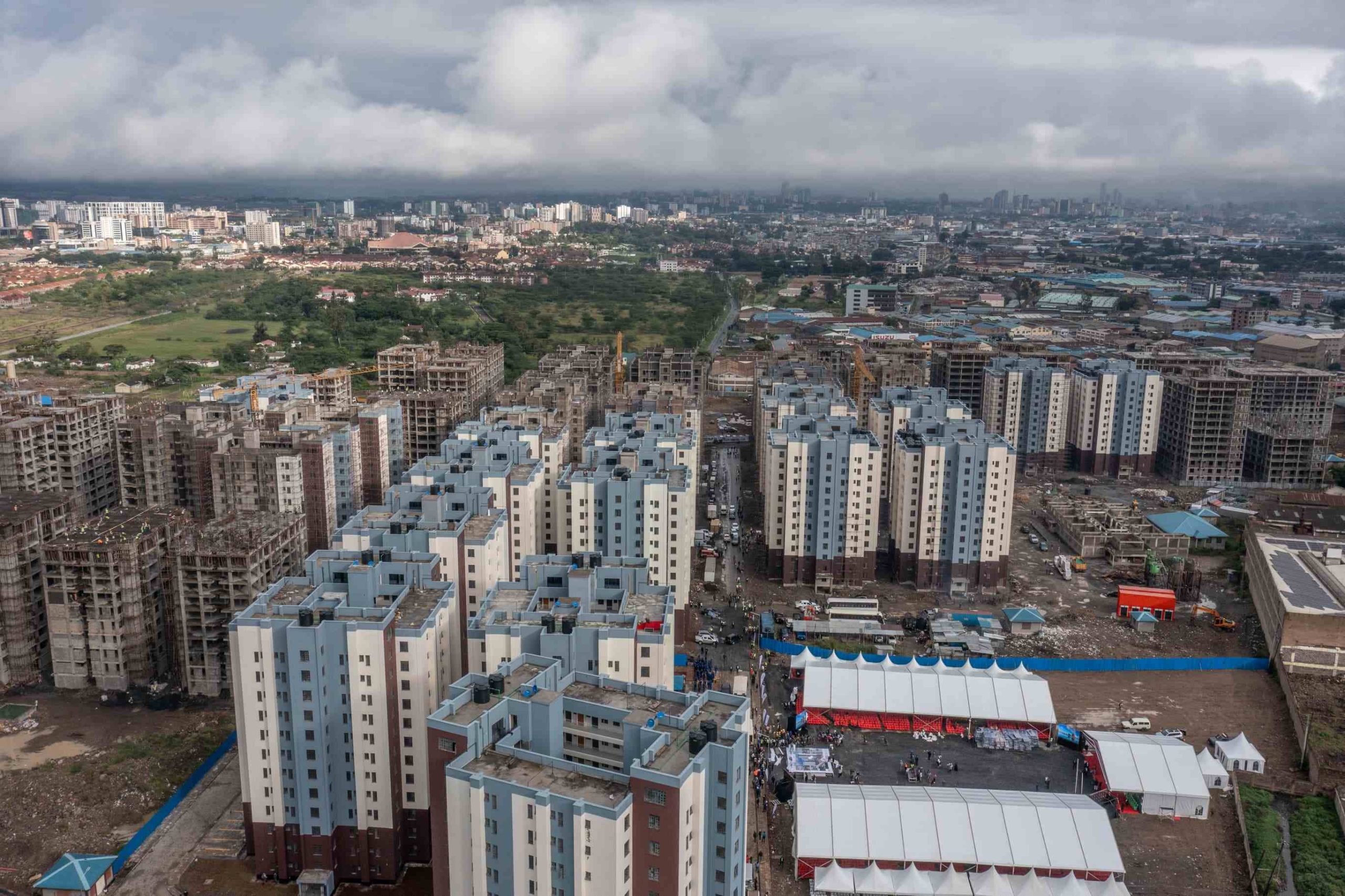
An artist’s impression of the proposed affordable housing project in Makongeni, Nairobi (Image: Files)
13. Churches and Schools
Churches, schools, and NGOs are transitioning in phased schedules to retain their community presence and activities.
In the new Makongeni, they will serve as community anchors, with improved facilities and space.
14. Communication
Communication channels include:
WhatsApp groups.
Estate posters.
Barazas.
Digital content.
Interpersonal briefings in Swahili and Sheng.
Verified briefing packs for leaders.
The communication strategy aims to reach people in familiar, accessible formats.
15. “This is just demolitions.”
Makongeni’s redevelopment is not defined by demolition but by renewal.
The new estate will include:
Modern high-quality housing.
Green parks.
schools.
A hospital.
Commercial areas.
Safe walkways.
Jobs for local residents.
From enumeration to Makao Bora cards, each step is documented because this is not the end of a community – it is the evolution of one.
Makongeni’s transformation is the clearest expression yet of Kenya’s attempt to implement documented, inclusive, people-first urban renewal.
History remembers leaders not for comfort but for courage.
Transformative figures share three traits: they disrupt the status quo, they execute under extreme constraints, and they envision a future beyond the present horizon.
From America’s founders who broke free from empire to the Asian Tigers who charted their own industrial path, progress has always meant unsettling the present in order to unlock the future. Kenya today stands at such a moment of reckoning.
In his first three years, President William Ruto has chosen disruption not as chaos but as a deliberate catalyst for reform and renewal.
His style blends radical change with pragmatic execution and aspirational vision – a rare mix that has begun reshaping Kenya’s politics and economy at a critical juncture.
This philosophical grounding is not foreign to Kenya. At independence, leaders faced the ideological question of how to grow.
Through Sessional Paper No. 10 of 1965, the nation adopted African Socialism – a uniquely Kenyan philosophy rooted in democracy, dignity, mutual responsibility, and a mixed economy.
Today, the Hustler Nation revives that founding debate with 21st-century urgency: what kind of economy should Kenya build, who should it serve, and how should resources be shared?
By re-centering politics on ordinary Kenyans – farmers, teachers, traders, boda boda riders, and the youth – the President has reopened the nation’s most fundamental questions.
President Ruto shares a moment with PS. Dr. Raymond Omollo during a previous state function in Nairobi (Image: Files)
His restructuring of subsidies, unpopular but necessary, reflects the very essence of radical leadership: rarely comfortable, often contentious, but always defined by courage to make privileged enemies in order to secure a fairer system for the majority.
Yet disruption alone is not enough. Practical governance is what sustains nations.
Confronted with public debt, food insecurity, and joblessness, the President has anchored reforms in agriculture, affordable housing, Universal Health Coverage, and MSME empowerment.
The Hustler Fund, offering micro-credit to citizens excluded from the banking system, directly challenges a decades-old financial order.
Already, thousands of small traders have accessed credit and invested in their livelihoods – a quiet but powerful revolution in grassroots empowerment.
Other nations offer useful mirrors. During the Great Depression, Franklin D. Roosevelt dared to launch the New Deal despite fierce opposition.
He showed that radical courage, even when unpopular, can stabilize a nation and restore hope.
Lee Kuan Yew in Singapore proved that disciplined, practical execution – not rhetoric – can transform a struggling society into an economic powerhouse.
And Mahatma Gandhi envisioned empowerment from the village outward, insisting that prosperity must begin at the grassroots.
These leaders illustrate what President Ruto is attempting: radical enough to disrupt, practical enough to execute, and visionary enough to dream beyond the present.
Unlike populists who promise without delivery, President Ruto has favored execution. His frequent county tours – where he listens, launches projects, and measures progress firsthand – show a leader deeply invested in service, not spectacle.
Practicality for him means choosing sustainability over applause, and patient reforms over quick fixes.
The results are becoming evident with Kenya’s GDP expanding to over Ksh 17 trillion, cementing its position as East and Central Africa’s largest economy and 6th in Africa. Inflation has dropped sharply from 9.6% in October 2022 to 4.1% as of today, easing the cost of living for ordinary households.
The shilling, once battered, has stabilized, while foreign exchange reserves stand at USD 11.8 billion, safeguarding imports and trade.
Farmers productivity is at an all-time high intensively boosted by the fertilizer subsidy program, with maize production in the North Rift and Western Kenya hitting record surpluses.
Incidents of cattle rustling have reduced by over 70% on account of Operation Maliza Uhalifu; a strategic approach incorporating peace dialogues, disarmament, and the deployment of community policing units.
Markets once abandoned in Turkana and West Pokot are thriving again, and schools that had closed due to insecurity are reopening.
The once barely attainable Universal Health Coverage is now in hand as Kenya rolled-out Taifa Care bringing under the Social Health Authority over 25 Million citizens a number triple its preceding NHIF.
Families can access healthcare without catastrophic costs. Over 7,500 new healthcare workers have been recruited and deployed, reducing doctor-to-patient ratios while digital health records are improving efficiency in county hospitals.
Kenya’s voice has also grown abroad.
The Africa Climate Summit and his leadership within the AU have placed the country at the front row of continental diplomacy. From climate action to regional trade and peace mediation, Kenya now plays a bridging role that strengthens both its global standing and its domestic economy.
For a nation long seen as a follower, this renewed assertiveness has repositioned Kenya as a leader.
Recognizing that the challenges remain stark: debt, unemployment, food insecurity, and climate shocks, Kenya’s history will not remember the comfortable or the cautiously populist.
It will remember those radical in courage, practical in action, and visionary in purpose to place the nation firmly in the future.
In this moment, President Ruto stands as all three.