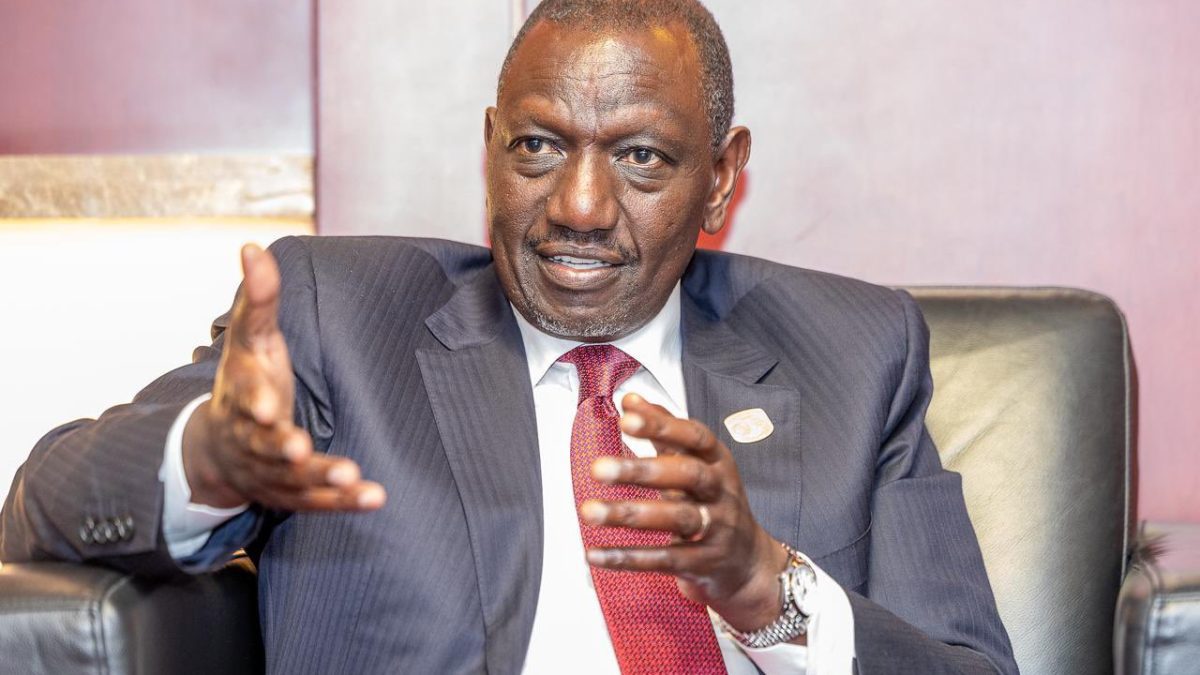
Ruto Responds To Reports Of Teachers Rejecting SHA

President William Ruto has dismissed the growing reports of teachers and civil servants rejecting the Social Health Authority (SHA), labeling the opposition as a “manufactured” campaign orchestrated by insurance cartels. Speaking at the World Health Summit on Monday, April 27, 2026, the President asserted that the resistance is not organic but rather a desperate attempt by “shrewd businessmen” to protect their profits.

Ruto claimed that the individuals who previously benefited from fraudulent schemes under the defunct NHIF are now using the media to paint SHA as dysfunctional in hopes of forcing a return to the old system.

READ ALSO; “Probably Not My Ride Or Die”- Kamene Goro Hits Back At DJ Bonez Over ICU Absence

The $60 Million “Loot”

The President provided specific figures to justify the transition, claiming that the shift to SHA has already resulted in massive savings for the taxpayer. He noted that the government previously spent $200 million annually on teachers’ insurance, a figure that has now dropped to $140 million.

“We have saved $60 million (Ksh 7.7 billion). The fellows who used to make that $60 million are the ones sponsoring headlines because they have lost business. This is the kind of resistance you go through when you make changes that create impact.” — President William Ruto

Ruto maintained that SHA offers superior benefits compared to the previous provider, including access to over 6,000 medical centers, all Level 6 hospitals, and higher daily limits. He stated he is “ready to pay the price” to protect public funds from those he described as “moguls” protecting their share of multibillion-shilling loot.

KUPPET Disputes “Superior” Cover

Despite the President’s assurances, the reality on the ground appears far more contentious. Teachers under the Kenya Union of Post-Primary Education Teachers (KUPPET) have staged protests, insisting that the SHA system is failing them in practice.

Union members argue that the transition has been a step backward, claiming that their previous provider, Minet, offered more reliable service. According to KUPPET:

  • Hospital Rejection: The majority of private and mission hospitals across the country are reportedly not accepting SHA, leaving many teachers stranded.

  • Inadequate Limits: Teachers claim the current insurance limits are too low to cover serious medical procedures.

  • Operational Gridlock: Protesters have decried the “dysfunctional” nature of the system, which they say has complicated access to basic healthcare.

A Battle of Narratives

The standoff highlights a significant gap between the government’s fiscal success story and the experience of the beneficiaries. While President Ruto frames the headlines as a product of “business interests,” the unions maintain that their grievances are real and rooted in a lack of access to essential medical services. As the government continues its push for SHA, the clash between administrative savings and service delivery remains the focal point of the nation’s healthcare debate.
SHA Announces Nationwide Negotiations To Reform Civil Servants’ Medical Cover

The Social Health Authority (SHA) is set to launch a series of nationwide negotiations with healthcare providers starting Tuesday, April 28, 2026. The move is aimed at finalizing fresh agreements under the Public Officers Medical Scheme Fund (POMSF) and resolving persistent operational hurdles that have recently disrupted healthcare access for civil servants.

According to a statement released on Sunday, the talks will focus on establishing new tariffs, refining service delivery frameworks, and streamlining claims management processes.

Consensus and Collaboration

The decision to initiate these talks follows extensive consultations between the Ministry of Health, the SHA, and several key stakeholders representing public sector workers. The negotiations involve:

  • Government Bodies: The State Department for Public Service, the Teachers Service Commission (TSC), the National Police Service, and the Kenya Prisons Service.

  • Labor Unions: The Kenya National Union of Teachers (KNUT), KUPPET, and the Union of Kenya Civil Servants (UKCS).

Officials have assured public officers that their medical cover benefits have not been reduced, despite the administrative adjustments and system transitions currently taking place.

Immediate Measures to Protect Beneficiaries

In a bid to stop the “friction” reported at hospital reception desks, the SHA has announced the immediate withdrawal of tariff locking in its digital systems. This temporary measure is designed to ensure that no civil servant is turned away or asked for cash payments while negotiations are ongoing.

Strict directives for healthcare providers include:

  • Zero Out-of-Pocket Costs: Hospitals are strictly prohibited from charging beneficiaries any co-payments or extra fees during this interim period.

  • Rapid Response Desk: A joint task force between SHA and UKCS has been established to intervene in cases where civil servants are detained in hospitals or to process refunds for unauthorized charges.

  • Contract Risks: Facilities that fail to reach a consensus on the new tariffs at the end of the talks face immediate contract termination.

Accountability and Sustainability

To safeguard the integrity of the fund, the Ministry of Health warned that any facility found imposing unauthorized charges will face “swift enforcement action,” including being struck off the SHA network.

The SHA has also committed to stricter oversight, including regular claims audits to detect fraud and continuous monitoring of loss ratios. Civil servants are encouraged to consult the updated list of formally contracted facilities on the SHA website to ensure they are seeking treatment from approved providers.

The nationwide talks are expected to conclude with the signing of new, binding agreements that will stabilize the Public Officers Medical Scheme Fund for the long term.

The Digital Sentinel- How AI Exposed A Ksh 11 Billion Fraud Scheme Within SHA

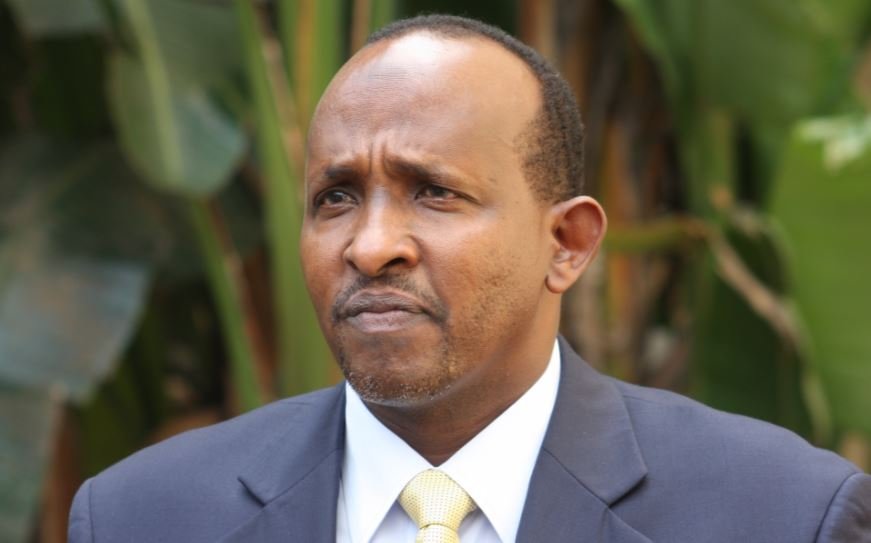
In a startling disclosure that underscores the deep-seated challenges within Kenya’s healthcare financing, Health Cabinet Secretary Aden Duale has confirmed that an estimated Ksh 11 billion in Social Health Authority (SHA) funds has been flagged as “unaccounted for” due to systematic fraud. Appearing before a parliamentary committee on January 28, 2026, Duale explained that this massive loss—occurring in just the first six months of the system’s operation—was only averted because the SHA’s new AI-driven fraud detection engine automatically rejected the suspicious claims.

The Cabinet Secretary’s testimony painted a picture of a medical sector still grappling with the “ghosts” of the now-defunct NHIF, as many facilities that previously defrauded the old fund allegedly attempted to exploit the new digital framework. The fraud engine revealed a series of medical “miracles” that defied both logic and international health standards. Perhaps most glaring was the trend of private hospitals reporting 100 percent Caesarean section (C-section) rates. While the World Health Organization (WHO) benchmarks typical C-section rates at 10–15 percent, one facility in Tharaka Nithi County submitted claims for 500 deliveries, every single one of which was supposedly a surgical procedure.

The manipulation extended beyond inflated clinical procedures into the realm of identity theft and “ghost” billing. In one of the most extreme cases highlighted, an individual in Kwale County managed to register 381 dependent children under a single SHA account, a matter that has now been escalated to the Directorate of Criminal Investigations (DCI). Furthermore, the AI system detected “ghost patients” in some counties who appeared to visit primary healthcare facilities as many as ten times in a single day, a coordinated effort likely aimed at artificially inflating government capitation payments.

Beyond high-tech anomalies, the investigation uncovered surprisingly low-tech forgeries. Audit teams found stacks of claim forms filled out in a single individual’s handwriting using the same pen, despite the legal requirement for unique signatures from patients, attending doctors, and hospital administrators. Many maternity claims were also submitted without the mandatory birth notification documents, which are legally required for any hospital birth. Additionally, some healthcare workers were found to have registered themselves as fake patients to generate a stream of fraudulent claims.

The fallout of these findings has created a significant rift between the Ministry of Health and private healthcare providers. While the Ministry claims to have successfully disbursed over Ksh 11.4 billion to hospitals since the SHA rollout, the Rural and Urban Private Hospitals Association (RUPHA) insists its members are still owed a staggering Ksh 76 billion. In response to this discrepancy, the SHA has issued a strict 15-day ultimatum for hospitals to account for Ksh 3 billion in flagged claims that are currently sitting in limbo due to missing documentation or suspected foul play.

Adding a layer of complexity to the situation is a report from Auditor General Nancy Gathungu, which raised concerns over the ownership and control of the Ksh 104 billion SHA system. The report indicates that the platform is currently managed by a private consortium allegedly linked to an Indian firm, meaning the Kenyan government does not yet have full ownership of the technology it relies on to collect roughly Ksh 11 billion in annual contributions. Despite these structural concerns, Duale remains firm on the system’s effectiveness, noting that its real-time capabilities are the only thing standing between the public purse and a repeat of the massive losses that plagued the previous health insurance regime.

President Ruto Pays Ksh2M Hospital Bill For Kamande Wa Kioi’s Wife, Sparking Public Outcry Over Failed Health Scheme

Murang’a Woman Representative Betty Maina revealed on Tuesday, November 11, that President William Ruto personally intervened to clear the remaining hospital bill for the wife of popular Mugithi musician Kamande wa Kioi. However, the goodwill gesture immediately ignited a fierce public backlash directed at the efficiency of the national health scheme.

Betty Maina announced on social media that the President paid Ksh2 million of the bill after the musician’s family and the Social Health Authority (SHA) had collectively settled over Ksh1.5 million.

“Mama Kioi, wife to Kamande Wakioi was unwell but has recovered at a Private hospital in Nairobi. SHA and the family were able to pay over Ksh1.5 million leaving a balance of Ksh2 million,” the MP wrote. “Special Thanks to H.E the President, Dr. William Ruto, I reached out to him yesterday on behalf of the family and today he gave me Ksh2 million that I have given to the Family.”

Critiques Target SHA and Access to Aid

The public reaction quickly shifted from gratitude to sharp criticism, focusing on the failure of the national health coverage and the perceived inequity of accessing personalized aid from the Head of State.

Netizens pointed out the glaring gap in the system, arguing that few citizens have the political access necessary to reach the President for such financial assistance:

  • “How many of us can reach the President? We don’t need politicians’ mercy – we need a working system.”
  • “It’s only in Kenya where a president’s ‘insurance’ covers you better than the national health cover.”
  • “So SHA couldn’t even pay half? What is the essence of a health insurance that only pays 42 per cent of the total bill?”

One commenter mused, “Assuming they had no access to you, mheshimiwa, they would have suffered or sold their land to clear the bill.”

The intense uproar led the Woman Representative to limit comments on her post, hiding the criticism already shared.

SHA Faces Ongoing Scrutiny

The incident adds to the mounting pressure on the Social Health Authority (SHA), which has faced criticism since its implementation in October 2024. The scheme has been struggling with claims that it barely covers patient bills, reports of hospitals rejecting the insurance, and ongoing multi-billion shilling fraud cases.

Dr. Raymond Omollo: Ruto’s Legacy of Bold Disruption, Reform and Dreams

History remembers leaders not for comfort but for courage.

Transformative figures share three traits: they disrupt the status quo, they execute under extreme constraints, and they envision a future beyond the present horizon.

From America’s founders who broke free from empire to the Asian Tigers who charted their own industrial path, progress has always meant unsettling the present in order to unlock the future. Kenya today stands at such a moment of reckoning.

In his first three years, President William Ruto has chosen disruption not as chaos but as a deliberate catalyst for reform and renewal.

His style blends radical change with pragmatic execution and aspirational vision – a rare mix that has begun reshaping Kenya’s politics and economy at a critical juncture.

This philosophical grounding is not foreign to Kenya. At independence, leaders faced the ideological question of how to grow.

Through Sessional Paper No. 10 of 1965, the nation adopted African Socialism – a uniquely Kenyan philosophy rooted in democracy, dignity, mutual responsibility, and a mixed economy.

Today, the Hustler Nation revives that founding debate with 21st-century urgency: what kind of economy should Kenya build, who should it serve, and how should resources be shared?

By re-centering politics on ordinary Kenyans – farmers, teachers, traders, boda boda riders, and the youth – the President has reopened the nation’s most fundamental questions.

President Ruto shares a moment with PS. Dr. Raymond Omollo during a previous state function in Nairobi (Image: Files)

His restructuring of subsidies, unpopular but necessary, reflects the very essence of radical leadership: rarely comfortable, often contentious, but always defined by courage to make privileged enemies in order to secure a fairer system for the majority.

Yet disruption alone is not enough. Practical governance is what sustains nations.

Confronted with public debt, food insecurity, and joblessness, the President has anchored reforms in agriculture, affordable housing, Universal Health Coverage, and MSME empowerment.

The Hustler Fund, offering micro-credit to citizens excluded from the banking system, directly challenges a decades-old financial order.

Already, thousands of small traders have accessed credit and invested in their livelihoods – a quiet but powerful revolution in grassroots empowerment.

Other nations offer useful mirrors. During the Great Depression, Franklin D. Roosevelt dared to launch the New Deal despite fierce opposition.

He showed that radical courage, even when unpopular, can stabilize a nation and restore hope.

Lee Kuan Yew in Singapore proved that disciplined, practical execution – not rhetoric – can transform a struggling society into an economic powerhouse.

And Mahatma Gandhi envisioned empowerment from the village outward, insisting that prosperity must begin at the grassroots.

These leaders illustrate what President Ruto is attempting: radical enough to disrupt, practical enough to execute, and visionary enough to dream beyond the present.

Unlike populists who promise without delivery, President Ruto has favored execution. His frequent county tours – where he listens, launches projects, and measures progress firsthand – show a leader deeply invested in service, not spectacle.

Practicality for him means choosing sustainability over applause, and patient reforms over quick fixes.

The results are becoming evident with Kenya’s GDP expanding to over Ksh 17 trillion, cementing its position as East and Central Africa’s largest economy and 6th in Africa. Inflation has dropped sharply from 9.6% in October 2022 to 4.1% as of today, easing the cost of living for ordinary households.

The shilling, once battered, has stabilized, while foreign exchange reserves stand at USD 11.8 billion, safeguarding imports and trade.

Farmers productivity is at an all-time high intensively boosted by the fertilizer subsidy program, with maize production in the North Rift and Western Kenya hitting record surpluses.

Incidents of cattle rustling have reduced by over 70% on account of Operation Maliza Uhalifu; a strategic approach incorporating peace dialogues, disarmament, and the deployment of community policing units.

Markets once abandoned in Turkana and West Pokot are thriving again, and schools that had closed due to insecurity are reopening.

The once barely attainable Universal Health Coverage is now in hand as Kenya rolled-out Taifa Care bringing under the Social Health Authority over 25 Million citizens a number triple its preceding NHIF.

Families can access healthcare without catastrophic costs. Over 7,500 new healthcare workers have been recruited and deployed, reducing doctor-to-patient ratios while digital health records are improving efficiency in county hospitals.

Kenya’s voice has also grown abroad.

The Africa Climate Summit and his leadership within the AU have placed the country at the front row of continental diplomacy. From climate action to regional trade and peace mediation, Kenya now plays a bridging role that strengthens both its global standing and its domestic economy.

For a nation long seen as a follower, this renewed assertiveness has repositioned Kenya as a leader.

Recognizing that the challenges remain stark: debt, unemployment, food insecurity, and climate shocks, Kenya’s history will not remember the comfortable or the cautiously populist.

It will remember those radical in courage, practical in action, and visionary in purpose to place the nation firmly in the future.

In this moment, President Ruto stands as all three.

Gachagua & Other Opposition Leaders Unite To Condemn Government Corruption

Former Deputy President Rigathi Gachagua has launched a scathing attack on the government’s new Social Health Authority (SHA), branding it a “grand scam” designed to siphon billions from taxpayers.

Speaking at a church service in Ongata Rongai, Kajiado County, Gachagua claimed that senior government officials are at the heart of the alleged scheme. He accused them of channeling massive funds to “ghost hospitals” while legitimate mission hospitals are left unpaid. “There is massive corruption at SHA. Billions are being allocated to ghost hospitals, yet mission hospitals receive nothing. Who is fooling who?” he posed.

Accusations of State House Corruption

In his first public appearance since returning from the United States, Gachagua continued his assault on the government at a rally in Ongata Rongai. He directly accused President William Ruto’s administration of enabling corruption, claiming that delegations visiting State House are being given bribes to support government initiatives.

“When I was in America, I heard the President lamenting about bribery among MPs. Yet State House itself is the epicenter of corruption,” Gachagua alleged. “Just the other day, people from Kiambu were each given ten thousand shillings.”

READ ALSO; Arrow Bwoy Accepts Boxing Match With Zari’s Husband Shakib, Sends A Warning

Opposition Leaders Unite in Criticism

Gachagua’s remarks came as other opposition leaders intensified their criticism of the Ruto administration over what they describe as rampant misuse of public funds.

Speaking in Narok County, Democratic Action Party-Kenya (DAP-K) leader Eugene Wamalwa echoed the sentiment, stating, “SHA is just a drop in the ocean of the daylight robbery we are witnessing.”

Former Interior Cabinet Secretary Fred Matiang’i also weighed in, warning that the opposition would not remain silent about the “plunder of public resources.” Kitutu Chache South MP Richard Onyonka added to the criticism, accusing officials of looting funds meant for healthcare while ordinary citizens suffer.

The leaders vowed to remain united and back a single opposition presidential candidate in the 2027 general election. “Whoever is chosen, we will stand with them,” Gachagua affirmed, a sentiment echoed by Wamalwa, who stated, “We will remain a united front.”

Mid-Term Scorecard: President Ruto’s Progress on the Bottom-Up Economic Agenda

At the halfway mark of President William Ruto’s first term, Kenya stands at a critical juncture, evaluating the successes and challenges of the Bottom-Up Economic Transformation Agenda (BETA) 2022-2027.

Designed to uplift millions at the base of the economic pyramid, BETA focuses on agriculture, MSMEs, affordable housing, healthcare, and digital transformation.

This mid-term review examines the administration’s key achievements, the impact on citizens, and areas requiring further intervention.

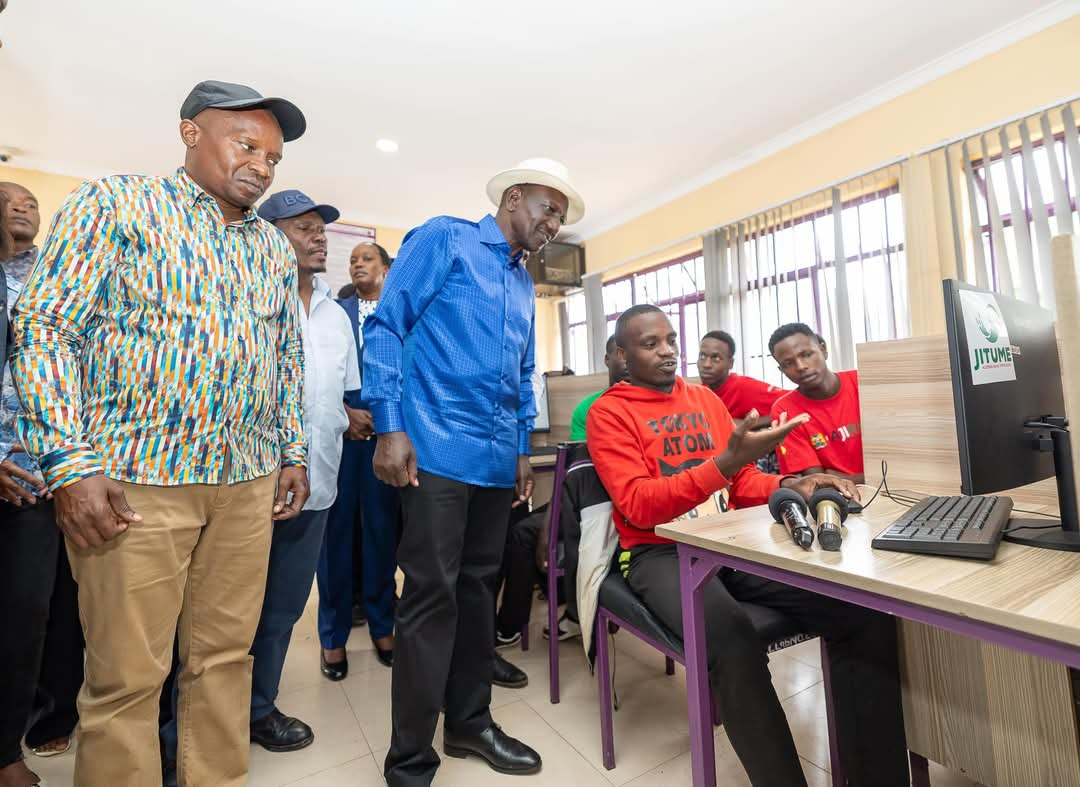
President Ruto, Vice President Kindiki interacts with IT students at an unidentified college (Image: Facebook)

1. Agriculture

Agriculture remains central to Kenya’s economy, and the administration has prioritized reducing production costs, stabilizing farmer incomes, and increasing output.

Key Achievements

Fertilizer Subsidy: The price of fertilizer dropped by 67%, from KES 7,500 in 2022 to KES 2,500 in 2025, boosting affordability for farmers.

Increased Maize Production: Output rose by 39%, from 61.7M 50-kg bags in 2022 to 85.7M in 2025.

Expansion of Livestock Insurance: The number of insured Tropical Livestock Units (TLUs) increased from 78,175 in 2022 to 649,518 in 2025, benefiting 1.6 million pastoralists.

Revival of Key Crops: Guaranteed Minimum Returns (GMR) introduced for dairy, sugarcane, wheat, macadamia, and miraa, stabilizing farmer incomes.

Impact and Challenges

These interventions have increased productivity, reduced dependency on imports, and improved food security. However, challenges persist, including climate-related risks and slow adoption of modern farming techniques.

2. MSME Economy

Micro, Small, and Medium Enterprises (MSMEs) are the backbone of Kenya’s economy, and the government has focused on easing financial access and reducing regulatory bottlenecks.

Key Achievements

Hustler Fund: KES 63.5 billion disbursed to 26.3 million individuals and KES 196.8 million to 58,630 small businesses.

Reduced Bureaucracy: Digital tax and regulatory compliance processes streamlined via eCitizen, reducing business registration time.

Market Access: 2,001 MSMEs facilitated to access local and regional markets, including subcontracting opportunities in the Affordable Housing Program.

Impact and Challenges

While the Hustler Fund has expanded financial inclusion, concerns over loan repayment rates and sustainability remain.

Additionally, informal businesses still struggle with licensing challenges.

President Ruto and other leaders inspecting progress at the Affordable Housing Project in Ruiru, Kiambu County (Image: Facebook)

3. Affordable Housing

Housing is a flagship priority, with the goal of delivering 250,000 affordable units annually.

Key Achievements

Affordable Housing Units: 130,988 units under construction in 2025, a 1,061% rise from 8,872 in 2022.

Job Creation: 206,000 new jobs created in construction, benefiting TVET graduates and Jua Kali artisans.

Expanded Mortgage Access: Low-cost mortgages under KES 10,000 introduced, with a 40% rise in refinanced mortgages since 2022.

Impact and Challenges

The housing sector has stimulated employment and investment, but land acquisition, financing, and public-private partnerships require strengthening to meet the ambitious targets.

4. Universal Health Coverage (UHC)

Healthcare reform has focused on expanding insurance coverage and improving service delivery.

Key Achievements

Social Health Insurance (SHI): Membership grew by 146%, from 8M NHIF members in 2022 to 19.7M under SHA in 2025.

Strengthening Primary Healthcare: 106,542 Community Health Promoters (CHPs) recruited and equipped, covering 8.5M households.

KEMSA Reform: 63% of medical supplies now sourced from local manufacturers, reducing reliance on imports.

Impact and Challenges

While healthcare access has improved, challenges include delays in full implementation of new health laws and initial operational inefficiencies in SHA.

5. Digital and Economic Growth

Kenya is positioning itself as a digital hub by expanding infrastructure and regulatory frameworks.

Key Achievements

E-Government Services: Expansion of digital identity systems and automation of public services.

Digital Jobs: Investment in online work programs and tech hubs to create employment for youth.

Impact and Challenges

The digital shift has improved efficiency, but cybersecurity risks and digital inclusion for marginalized groups need to be addressed.

Conclusion

At the mid-term mark, the Kenya Kwanza administration has made significant progress in key sectors, laying a foundation for economic transformation.

However, challenges such as financing gaps, climate resilience, and public-private sector collaboration require further attention.

The next phase will be critical in ensuring these gains translate into sustainable economic prosperity for all Kenyans.

Verdict

Progress has been made, but sustained effort is needed to fully realize the BETA vision.