Tanzania Government Responds To Ruto’s Remarks On Their Infrastructure

The Tanzanian government has formally pushed back against remarks made by President William Ruto, who suggested that Kenya’s road infrastructure far outstrips the rest of East Africa combined.

During a church service on April 19, President Ruto defended Kenya’s high fuel prices by framing the country as a “middle-income economy” with a vastly superior road network that requires more revenue to maintain.

The “20,000 Kilometer” Dispute

President Ruto claimed that Kenya possesses approximately 20,000 kilometers of tarmacked roads—a figure he alleged exceeds the total combined tarmac of Uganda, Tanzania, Rwanda, Burundi, South Sudan, and the DRC.

“If you add the number of kilometres in Uganda, Tanzania, DRC, Rwanda, Burundi and South Sudan, it is not 20,000 km,” Ruto stated. “The 20,000 kilometres we have in Kenya is more than all the tarmac in all the other 7 countries in East Africa.”

The President used this comparison to justify why fuel in Kenya is more expensive than in neighboring countries, arguing that the scale of infrastructure development puts Kenya in a different league than its “least developed” neighbors.

Tanzania Fires Back with Facts

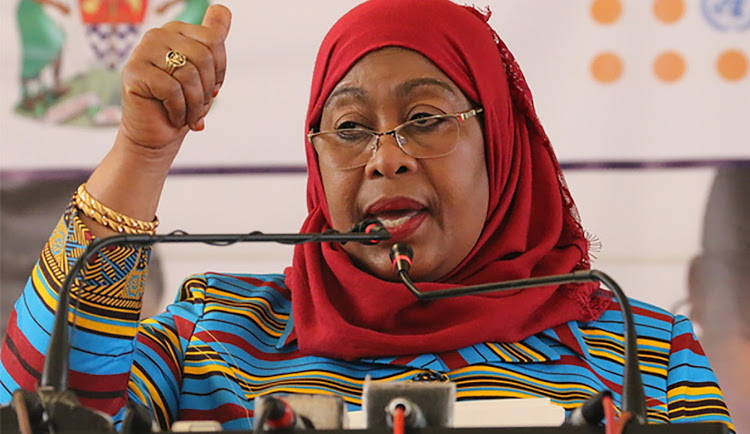
President Samia Suluhu’s administration was quick to address these claims, labeling them as misleading. On Tuesday, April 21, a Tanzanian minister clarified the actual state of their national infrastructure to correct the record.

The Reality of the Numbers:

  • Ruto’s Claim: Tanzania and five other neighbors combined have less than 20,000 km of tarmac.

  • Tanzania’s Clarification: Tanzania alone has 16,000 kilometers of tarmacked roads—just 4,000 km shy of Kenya’s total.

A Middle-Income Friction

The diplomatic friction stems from Ruto’s insistence that Kenya should only be compared to other middle-income nations rather than its immediate neighbors. However, the Tanzanian response suggests that the gap in infrastructure is much narrower than portrayed, challenging the narrative used to justify the rising cost of living and fuel levies in Kenya.

This back-and-forth marks a rare public disagreement over regional statistics, highlighting the sensitivities surrounding national pride and economic standing within the East African Community (EAC).

Gachagua Hits Back At Rutos Defense Of Fuel Price Hike

The political landscape in Kenya has reached a boiling point following a historic spike in fuel prices. Former Deputy President Rigathi Gachagua, now leading the Democracy for Citizens Party (DCP), has launched a scathing attack on President William Ruto, alleging that the President is personally profiting from the misery of Kenyans.

​Here is an overview of the situation and the specific allegations made by Gachagua.

The Allegation: A “Billion-Shilling Windfall”

​In a series of explosive statements issued in mid-April 2026, Gachagua accused the Ruto administration of orchestrating a fuel scandal through the Government-to-Government (G-to-G) oil deal.

The Key Claims:

  • The “5 Shilling” Kickback: Gachagua alleges that President Ruto stands to gain approximately KSh 5 per litre of fuel consumed in the country.

  • Massive Profits: Based on national consumption levels, Gachagua claims this translates to roughly KSh 2.5 billion per month, and as much as KSh 30 billion since the G-to-G arrangement began.

  • Proxy Companies: The former DP has publicly named companies like Gulf Energy and Stabex International, alleging they act as intermediaries that facilitate these irregular gains for the executive.

​”Kenyans are paying for a system where public policy and private gain have been dangerously intertwined.” — Rigathi Gachagua, April 15, 2026.

Context: The April 2026 Price Shock

​The accusations come on the heels of one of the largest single-month fuel price increases in Kenya’s history. On April 14, 2026, the Energy and Petroleum Regulatory Authority (EPRA) announced:

  • Super Petrol: Increased by KSh 28.69 (Retailing at KSh 206.97).

  • Diesel: Increased by KSh 40.30 (Retailing at an all-time high of KSh 206.84).

​While the government attributes these hikes to a global supply shock caused by Middle East tensions—specifically disruptions in the Strait of Hormuz—Gachagua argues the “landed cost” is being artificially inflated by domestic political interests.

The Government’s Defense and Response

​President Ruto and his allies have dismissed Gachagua’s claims as “political jealousy” and “malice.” To counter the public outcry, the President took the following steps:

  1. VAT Reduction: Assented to the VAT Amendment Bill 2026, which temporarily slashes VAT on fuel from 16% to 8% for three months.

  1. Price Stabilization: Deployed KSh 6.2 billion from the Petroleum Development Levy (PDL) to prevent petrol from hitting even higher marks (estimates suggested petrol could have reached KSh 260 without intervention).

  1. Legal Action: Private companies mentioned in Gachagua’s speeches, such as Stabex, have sued him for defamation, demanding a public retraction

Tension As Gachagua And Ruto Exchange Insults In Public

The political landscape in Kenya has shifted from hushed tensions to an all-out public confrontation. In late March and early April 2026, President William Ruto and his former Deputy, Rigathi Gachagua, traded sharp barbs in a series of highly publicized encounters that have signaled the definitive end of their once-solid “Umoja” alliance.
​The friction reached a fever pitch on Wednesday, April 8, 2026, during the burial service of former Ol Kalou MP David Njuguna Kiaraho in Nyandarua. This event marked the first time the two leaders faced each other publicly since Gachagua’s impeachment in late 2024.
​1. The Nyandarua Face-Off: “Betrayal is Not Forgiven”
​Standing just meters away from the President, a fiery Gachagua—now leading the Democracy for Citizens Party (DCP)—delivered a blunt “lecture” to his former boss. He accused the President of betraying the Mt. Kenya region, which was instrumental in his 2022 victory.
​The “Mugumo Tree” Metaphor: Gachagua told Ruto that while he was successfully removed from the DP’s office, removing him from the hearts of the people was “like trying to cut a Mugumo (fig) tree with a razor blade.”
​The Tribalism Debate: Gachagua took issue with Ruto labeling certain political stances as “tribal,” reminding the President that the Mt. Kenya community voted for a “William Ruto” and not a “Kamau” or “Njoroge,” proving they were not tribalists when they supported him.
​The “Bad Advisors” Narrative: Gachagua singled out National Assembly Majority Leader Kimani Ichung’wah, accusing him of being a “child” leading the President into a political pit.
​2. Ruto’s Rebuttal: From Policy to Personality
​President Ruto has not remained silent. During recent tours in Western Kenya (Vihiga and Bungoma), the President escalated the rhetoric, shifting from development talk to personal swipes.
​Body Shaming Allegations: In a move that sparked significant social media debate, Ruto made remarks about his opponents’ physical appearances, telling them to “reduce where they eat” and stop “polluting the air” at rallies.
​The “Political Tribalism” Charge: Ruto maintained that his former deputy was removed from Parliament precisely because of “tribalism” and vowed that Gachagua would “never lead anybody in this country” again.
​Direct Dismissal: Ruto dismissed the criticism of his administration, suggesting that Gachagua and other opposition figures were merely “bitter” over failed business dealings and lost tenders.

President Ruto Offers To Boost Majembe vs Mbavu Destroyer Boxing Match With Millions

President William Ruto has once again signaled his affinity for the “hustler” creative economy by extending a significant financial boost to two of Kenya’s rising digital stars. During a recent encounter that blended high-level politics with grassroots humor, the President offered a substantial Ksh 1 million to the popular comedy duo, Mbavu Destroyer and Majembe. The gesture, which quickly went viral across TikTok and X (formerly Twitter), is being seen as a calculated move to validate the administration’s “Talanta Hela” spirit by putting resources directly into the hands of young creators who have built massive audiences through raw, relatable content.

Mbavu Destroyer vs Majembe fight

Known for their rib-cracking street skits and unfiltered depictions of life in the “trenches,” Mbavu Destroyer and Majembe have carved out a niche that resonates deeply with the ordinary Kenyan. Their meeting with the Head of State was characterized by the President’s visible amusement as the duo showcased the very craft that made them famous. Ruto, who often positions himself as a patron of the youth, noted that the Ksh 1 million was intended to help the creators professionalize their output. The funds are expected to go toward high-quality recording equipment, studio space, and branding, allowing the duo to scale their digital footprint from casual content to a fully-fledged production house. For the comedians, the transition from filming on dusty streets to receiving a windfall from the country’s most powerful office is a classic “hustle-to-success” story that reinforces the administration’s narrative of upward mobility.

However, the gesture was not without its share of online scrutiny. As the news of the “million-shilling handshake” spread, netizens were divided on its implications. While many fans celebrated the duo’s success as a win for the entire creative community, critics were quick to question the sustainability of such one-off cash injections. On social media, discussions arose regarding whether these “presidential gifts” are a substitute for the structural reforms needed in the creative sector, such as better copyright laws and institutionalized funding. Others pointed to the irony of such generosity occurring amidst a backdrop of austerity measures and budget cuts in sectors like education, highlighting the ongoing tension between populist political gestures and the country’s broader fiscal realities.

Regardless of the political debate, the immediate impact on the lives of Mbavu Destroyer and Majembe is undeniable. The duo expressed profound gratitude for the recognition, promising to use the platform and the funds to mentor other aspiring Gen Z creators. This interaction serves as a striking reminder of the shifting power dynamics in Kenya’s media landscape. In 2026, viral fame is no longer just a hobby; it is a legitimate currency that can open the doors of State House. As the digital economy continues to evolve, Ruto’s engagement with such creators suggests that the government is increasingly aware that the hearts and minds of the youth are won one viral skit—and one million shillings—at a time.

President Ruto Pays Ksh2M Hospital Bill For Kamande Wa Kioi’s Wife, Sparking Public Outcry Over Failed Health Scheme

Murang’a Woman Representative Betty Maina revealed on Tuesday, November 11, that President William Ruto personally intervened to clear the remaining hospital bill for the wife of popular Mugithi musician Kamande wa Kioi. However, the goodwill gesture immediately ignited a fierce public backlash directed at the efficiency of the national health scheme.

Betty Maina announced on social media that the President paid Ksh2 million of the bill after the musician’s family and the Social Health Authority (SHA) had collectively settled over Ksh1.5 million.

“Mama Kioi, wife to Kamande Wakioi was unwell but has recovered at a Private hospital in Nairobi. SHA and the family were able to pay over Ksh1.5 million leaving a balance of Ksh2 million,” the MP wrote. “Special Thanks to H.E the President, Dr. William Ruto, I reached out to him yesterday on behalf of the family and today he gave me Ksh2 million that I have given to the Family.”

Critiques Target SHA and Access to Aid

The public reaction quickly shifted from gratitude to sharp criticism, focusing on the failure of the national health coverage and the perceived inequity of accessing personalized aid from the Head of State.

Netizens pointed out the glaring gap in the system, arguing that few citizens have the political access necessary to reach the President for such financial assistance:

  • “How many of us can reach the President? We don’t need politicians’ mercy – we need a working system.”
  • “It’s only in Kenya where a president’s ‘insurance’ covers you better than the national health cover.”
  • “So SHA couldn’t even pay half? What is the essence of a health insurance that only pays 42 per cent of the total bill?”

One commenter mused, “Assuming they had no access to you, mheshimiwa, they would have suffered or sold their land to clear the bill.”

The intense uproar led the Woman Representative to limit comments on her post, hiding the criticism already shared.

SHA Faces Ongoing Scrutiny

The incident adds to the mounting pressure on the Social Health Authority (SHA), which has faced criticism since its implementation in October 2024. The scheme has been struggling with claims that it barely covers patient bills, reports of hospitals rejecting the insurance, and ongoing multi-billion shilling fraud cases.

Ruto And Gachagua Join In Mourning Betty Bayo

The nation is in mourning following the death of celebrated gospel musician Beatrice Wairimu Mbugua, popularly known by her stage name, Betty Bayo. The singer passed away on Monday afternoon while receiving treatment after a prolonged battle with blood cancer (Leukemia).

Tributes honoring her profound contribution to Kenyan gospel music have poured in from across the political and social spectrum, underscoring her widespread impact.

President Ruto Leads National Tributes

President William Ruto led the country in mourning the artist, describing Betty Bayo as an “extraordinary gospel artiste” whose music consistently carried a powerful message of hope.

The President specifically highlighted her breakthrough song, “11th Hour,” calling it a powerful anthem of “divine turnaround.”

“Her message was consistent, clear, and heartfelt: never give up, no matter the hour, no matter the storm. Her voice may have fallen silent, but her ministry lives on in every heart she touched, every soul she uplifted, and every life she helped steady in difficult moments,” President Ruto wrote.

He noted that for over fifteen years, Betty Bayo lifted spirits with music centered on themes of resilience, renewal, and steadfast faith in the face of life’s challenges.

Former Deputy President Honors Her Legacy

Former Deputy President Rigathi Gachagua also expressed his devastation at the news, stating that the loss was “truly heartbreaking” for him and the entire nation.

Gachagua specifically honored her “remarkable talent and contribution,” noting that her beautifully crafted lyrics and charity work touched many souls and transformed countless lives, cementing her legacy far beyond her music career

Gachagua Yet Again Accuses Ruto Of Corruption In Fiery Response To “Uneducated” Claims

An escalating political rivalry between President William Ruto and his former Deputy President, Rigathi Gachagua, has recently taken a new and public turn, centering on the topic of education. This comes after President Ruto reportedly mocked Gachagua, claiming his lack of education made him unfit to serve as his assistant.

During a public address on Friday, September 12, 2025, President Ruto took a jab at Gachagua while praising his new deputy, Professor Kithure Kindiki. The President, who holds a PhD, has increasingly used his academic credentials as a political tool to frame Kindiki as an “educated deputy” and a more capable partner.

Gachagua’s Fiery Comeback

Rigathi Gachagua, who was recently impeached from the Deputy Presidency, did not waste any time responding. Speaking at a political event in the Mt. Kenya region, he delivered a sharp retort, accusing the President of using his academic qualifications to undermine others.

Gachagua’s counter-attack was not a defense of his education but a direct assault on the integrity of the President’s administration. He accused the President of using State House to orchestrate corruption and political patronage, stating that such actions rendered academic credentials meaningless.

“You can have all the degrees in the world,” Gachagua stated, “but if your government is busy taking bribes and your meetings are breeding grounds for corruption, then your education is useless.”

The Political Ramifications

The public exchange has been widely seen as a brutal escalation of the ongoing feud between the two leaders, who were once a formidable political pair. The use of education as a weapon has sparked a wider debate in Kenya, with many questioning the role of academic credentials in leadership.

The rivalry is no longer subtle; it has become an open political warfare, with Gachagua now firmly positioned as a key opposition figure. His recent claims and direct attacks on the President suggest that the battle for political supremacy ahead of the 2027 elections has just begun.

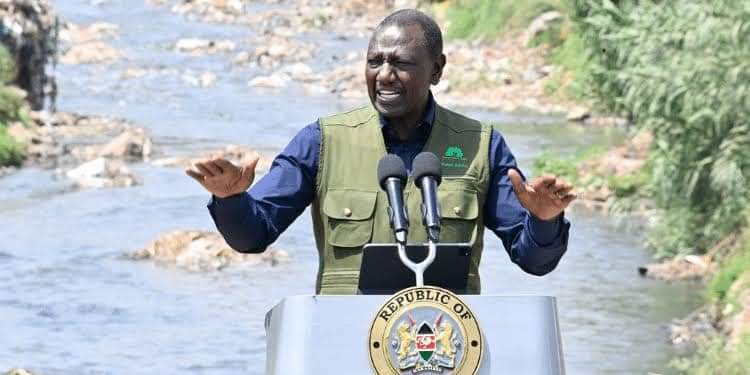
President Ruto Vows To Clean Nairobi River To Restore Fish

President William Ruto has reaffirmed his government’s unwavering commitment to cleaning and restoring the Nairobi River, making a bold promise to launch a new fish market in the area within two weeks.

Speaking during an inspection tour of the ongoing Nairobi River clean-up exercise in Dandora on Thursday, July 17, 2025, the Head of State articulated a vision that extends beyond mere waste removal. He emphasized a comprehensive plan to breathe new life into the once heavily polluted river, transforming it into a vibrant hub of economic activity. The President underscored his intention to make the river clean enough to sustain aquatic life, particularly fish, as part of a broader strategy to revitalize Nairobi’s environment, boost its economy, and improve residents’ livelihoods.

“Naona mko na mpango. Mimi nimekuja hapa kwa sababu tulikubaliana na nyinyi ya kwamba hii Nairobi River, tanataka tuipangie vizuri. Tuondoe maji taka, tuondoe sewage, tuweke samaki, tutengeneze barabara, tutengeneze penye watoto watachezea, na tuwapangie manyumba na maendeleo. Ahadi ni deni. Nitatengeneza hii maneno, watu wa Nairobi, Mathare, Kamkunji,” Ruto declared, underscoring his dedication to the ambitious project. (I see you have a plan. I came here because we agreed with you that we want to organize this Nairobi River well. We will remove wastewater, remove sewage, put in fish, build roads, create play areas for children, and plan houses and development for you. A promise is a debt. I will fix these things, people of Nairobi, Mathare, Kamkunji.)

He further announced that his administration will construct two new sewer lines. This critical infrastructure is designed to prevent raw sewage, a major source of pollution, from draining directly into the river. “Mbali na kutengeneza river hii, pia tutajenga sewer lines mbili; ile maji ya taka taka haiwezi tena kuingia kwa river, ndo tuhakikishe maji yote ya taka inapitia kwa sewer lines,” he explained. (Apart from restoring this river, we will also build two sewer lines; so that wastewater can no longer enter the river, to ensure all wastewater passes through sewer lines.)

Fish Market by August

In what was the highlight of his speech, President Ruto assured local residents that a dedicated fish market would be operational in the area within a fortnight. “Nimeambiwa mnataka nijenge soko la samaki na mali ingine; nataka niwaambie kuwa, wiki mbili zinakuja, mtakuwa na soko tukiendelea kusafisha Nairobi River,” he announced, setting a clear deadline for the new development. (I have been told you want me to build a fish market and other facilities; I want to tell you that, in the next two weeks, you will have a market as we continue cleaning the Nairobi River.)

This is not the first time the President has made such a promise. In December 2024, during an earlier inspection of the Nairobi River, Ruto had articulated a similar ultimate goal: to restore the river to a state where it could support fish and provide clean water for children. “Tanakikisha kwamba tunaweka usafi kwa mto, tuweke hadi samaki na pia maji safi watoto wetu watumie,” he said at the time. (We will ensure that we clean the river, put in fish, and also have clean water for our children to use.)

As part of the broader Nairobi Rivers Regeneration Programme, the government also plans to construct weir dams to control water levels and establish wetlands to facilitate natural water purification. The ambitious clean-up project extends beyond mere environmental restoration. President Ruto emphasized his administration’s keen focus on urban renewal, creating thousands of jobs, and offering affordable housing solutions to Nairobi’s low-income earners.

“We will also build 50,000 social houses, making sure that our youth get employed while also making the city clean. We will need 30,000 people,” he stated in 2024, outlining the program’s significant employment potential.

The Nairobi Rivers Regeneration Program is expected to transform the city by vastly improving the environment, creating thousands of jobs, and providing much-needed affordable housing, fundamentally enhancing the quality of life for its residents.

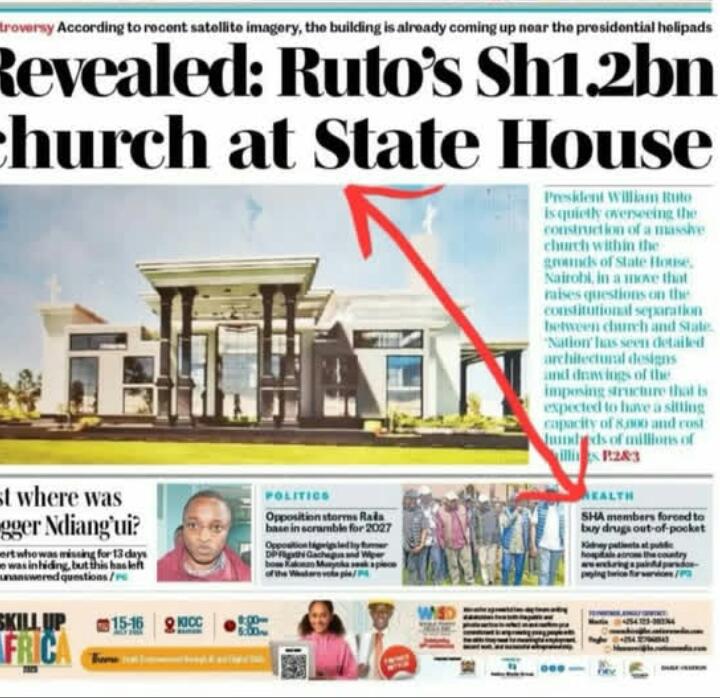
President Ruto’s Alleged 1.2 Billion ‘Secret’ Church At State House Causes Public Uproar

President William Ruto is reportedly constructing a large church with an estimated capacity of 8,000 congregants within the grounds of State House in Nairobi. Architectural drawings obtained by the Daily Nation suggest the project will cost approximately KSh 1.2 billion.

Dubbed the “Cathedral,” the design by Skair Architects Limited features tall windows. Satellite images indicate that construction is underway near the presidential helicopter landing pad.

Read also; Ciru Muriuki Shares Heartbreaking Tribute To Late Fiancé Charles Ouda On His 40th Birthday

A prominent, large cross tops the main tower, clearly signifying the building’s religious purpose and making it visible from a distance.

The design includes a cross at both the front and back, with the front one being more conspicuous. Inside, the main hall is designed with four rows of pews to accommodate the large congregation.

President Ruto has previously expressed his desire to build a church to affirm his Christian faith. As Deputy President, he had a designated prayer area at his official Karen residence, where he frequently hosted religious leaders in the lead-up to the 2022 general election.

Kenyans have reacted to the construction of the sumptuous church, with most of them questioning why huge amounts of money would be used in such during this tough economic times.


President Ruto Urges Opposition To Focus On Their Agenda, Not “Ruto Obsession”

President William Ruto has once again criticized his political opponents, accusing them of being overly fixated on him rather than presenting their own agendas to Kenyans. Speaking at the groundbreaking ceremony for the 2,200-unit Boma Yangu Railway City Estate Phase 1A, the President challenged the opposition, led by his former Deputy Rigathi Gachagua, to prioritize creating jobs for the youth instead of exploiting them for political gain.

“I keep telling these people to define their agenda. If you ask them their plan to transform Kenya, they’ll say ‘Ruto.’ If you ask about their agenda for housing or employment for the youth, they’ll still say ‘Ruto,”‘ President Ruto asserted. “I am telling you, if you remove Ruto, these people will be completely clueless.”

Call for Youth Engagement, Not Exploitation

Ruto urged Kenyan youth not to allow politicians to use them to incite violence or perpetrate chaos. Instead, he advised them to partner with the government, channeling their energy towards transforming Kenya through various flagship projects.

The President’s remarks come in the wake of the June 25 protests, which the Interior Ministry alleges involved politicians hiring individuals to destroy, loot, and torch small-scale businesses in Nairobi and other urban areas.

Ruto assured residents that the government, through its security agencies, will continue to foster a conducive environment for all businesses. “I want the youth of Nairobi to keep peace and and not allow those other people to misuse your energy and potential to cause anarchy,” he concluded.

State House Nairobi To Receive Sh680 Million Facelift Amid Public Outcry Over Taxes

The Kenyan government has allocated over Sh680 million for the renovation of State House Nairobi, a decision that comes amidst growing public frustration over soaring taxes and deep cuts to essential services. This funding is part of a larger Sh894.9 million plan aimed at revamping the President’s official residence and several state lodges across the country.

Budget estimates for the 2025/2026 financial year reveal that a significant portion of the Sh2.3 billion set aside for the Executive Office of the President will be directed towards the refurbishment and maintenance of State House Nairobi and various lodges. This continues a trend observed since President William Ruto took office in 2022.

Details of the Allocation

Specifically, State House Nairobi is earmarked to receive Sh680.7 million. The remaining funds will be distributed among state lodges in:

  • Eldoret: Sh60.1 million
  • Mombasa: Sh42.5 million
  • Nakuru: Sh25 million
  • Kakamega: Sh25 million
  • Kisumu: Sh24 million
  • Kisii: Sh12.5 million
  • Sagana: Sh15 million
  • Mechanical Garage: Sh10 million

These renovations are part of ongoing construction and refurbishment projects that have transformed State House Nairobi into a nearly permanent construction zone. Changes have included structural overhauls, roofing works, and a controversial redesign that altered the colonial-style architecture into a flat-roofed structure, a move that drew strong backlash from the Architectural Association of Kenya.

Contradictory Timing and Priorities

The timing of this significant allocation has intensified public criticism, especially coming just a year after the government withdrew contentious tax proposals following deadly youth-led protests against the Finance Bill 2024.

Furthermore, these renovations appear to contradict President Ruto’s repeated pledges to cut non-essential and luxury spending under his administration’s austerity policy. Interestingly, the Sh894.9 million allocation follows a recent reversal of earlier budget cuts. In the second supplementary estimates for 2024/2025, the Treasury had initially removed Sh1.5 billion earmarked for these very renovations. The reappearance of these funds in the new budget raises significant questions about the government’s true priorities.

Defending the expenditure, the Treasury stated that these allocations are necessary to facilitate the President’s leadership and constitutional functions. “In the fiscal year 2025/26 and throughout the medium-term period, the State House will support His Excellency in executing the constitutional mandate,” the budget documents read.

The facelift projects at State House Nairobi reportedly date back to late 2022, shortly after President Ruto’s inauguration, following assessments that deemed parts of the 117-year-old building structurally unfit. Architects had reportedly recommended new construction to replace deteriorating sections of the historic site, which was originally built as the residence of the governor of the British East Africa Protectorate.

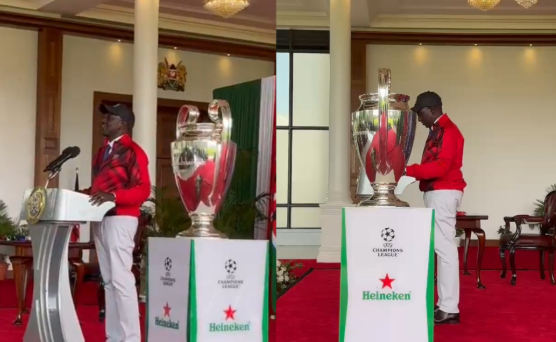
President Ruto Welcomes UEFA Champions League Trophy to Kenya in Historic Visit

President William Ruto proudly welcomed the iconic UEFA Champions League trophy to Kenya, marking a historic moment for football enthusiasts across the nation. The prestigious silverware, a symbol of Europe’s elite club competition, arrived at State House, Nairobi, as part of the final leg of a global tour organized by Heineken, in collaboration with UEFA and the Football Kenya Federation (FKF). The event, steeped in excitement and national pride, underscored Kenya’s growing passion for football and its aspirations to become a powerhouse in the sport.

The trophy, accompanied by German football legend Bastian Schweinsteiger—a 2013 Champions League winner with Bayern Munich—was formally presented to President Ruto during a vibrant ceremony attended by senior officials from the Ministry of Sports, FKF, and representatives of Kenya Wine Agencies Limited (KWAL), part of the Heineken company. The visit, which followed stops in Vietnam, Indonesia, South Africa, and Zambia, aimed to bring the magic of the Champions League closer to fans worldwide, offering Kenyan supporters a rare opportunity to engage with one of football’s most coveted prizes.

President Ruto, a self-proclaimed Arsenal supporter, expressed his enthusiasm for the occasion, highlighting the trophy’s significance as a source of inspiration for Kenya’s youth.

The UEFA Champions League is a powerful symbol that fuels dreams in football

Ruto remarked during the ceremony.

It inspires millions of young footballers across the world, Africa and Kenya included. This is the ultimate football destination.

He emphasized the potential of professional football to transform lives, urging stakeholders to harness the sport’s commercial and social benefits to uplift players, coaches, and communities.
The President’s personal connection to football shone through as he voiced optimism about Arsenal’s chances in the ongoing Champions League semi-finals. Referencing their 1-0 deficit against Paris Saint-Germain (PSG), Ruto exuded confidence, stating,

Since I am the last to hold it, I am praying for my team Arsenal so that this year they lift this trophy in the finals.

He added a call for unity among football fans, encouraging Kenyans to enjoy the game regardless of their team allegiances.

Many Kenyans are following with keen interest the ongoing UEFA Champions League semi-finals… Whichever team you are rooting for, let us enjoy the game

he affirmed.
The event also highlighted Kenya’s commitment to elevating its football profile on the global stage. President Ruto challenged the FKF and other stakeholders to address managerial challenges and raise the standard of Kenyan football to match the country’s storied success in athletics.

You have the heavy responsibility to lift football in our country to the level of athletics

he urged, pointing to the talent of Kenyan players who have competed in top global leagues as evidence of the nation’s potential.
Bastian Schweinsteiger, whose presence added star power to the occasion, shared his excitement about connecting with Kenyan fans.

Football is all about connection, emotion, and unforgettable moments

the former Bayern Munich midfielder said.

Some of the most passionate fans I’ve met have never even been to a stadium, yet their love for the game is just as strong. I’m excited to bring the magic of the tournament to fans in Kenya.

The trophy’s visit is part of a three-day tour in Kenya, culminating in a public display on Saturday, May 3, where fans will have the chance to see the silverware up close and take photographs. Heineken and FKF also planned a fun match session featuring Kenyan football legends interacting with Schweinsteiger, further engaging the local football community. Jonas Geeraerts, Commercial Director at KWAL, emphasized the significance of the event, stating,

The UEFA Champions League is a truly global competition, and we are delighted to give Kenyan fans a chance to experience the iconic trophy up close and personal.

This visit, the first since the Champions League trophy toured Kenya 13 years ago, comes at a time when Kenya is preparing to co-host the 2027 Africa Cup of Nations (AFCON) alongside Uganda and Tanzania. President Ruto’s administration has prioritized sports infrastructure development, with ongoing renovations at Nyayo, Kasarani, and Kipchoge Keino Stadiums, signaling a deliberate push to position Kenya as a hub for African football.
The arrival of the Champions League trophy not only celebrates Kenya’s love for the beautiful game but also serves as a rallying call for the nation to nurture its football talent and infrastructure. As President Ruto handed the spotlight to the youth and fans, his message was clear: Kenya’s football dreams are within reach, and moments like these are just the beginning.

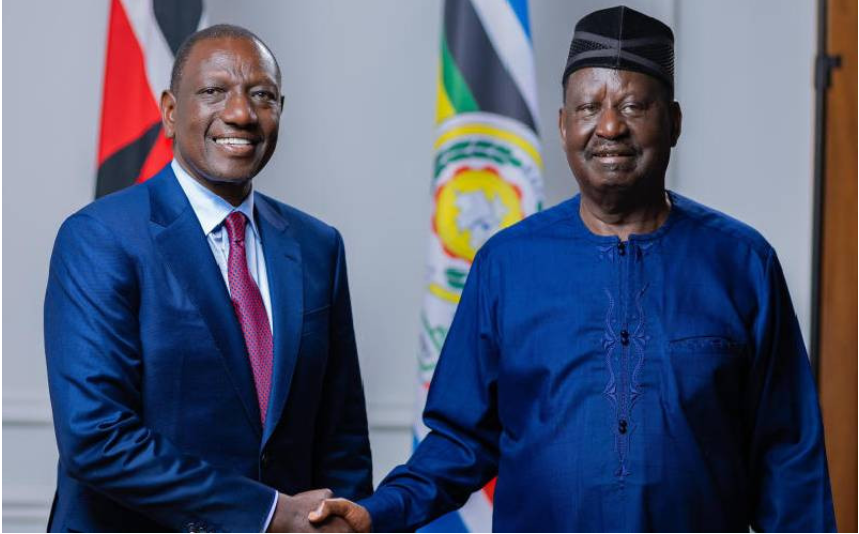
Raila Odinga to Kenyans: “What Happens After Ruto?”

Raila Odinga Defends Alliance with Ruto, Questions Calls for His Resignation

Raila Odinga has continued to justify his political collaboration with President William Ruto, urging Kenyans to prioritize stability over agitation.

Speaking in Machakos County on Saturday at the funeral of former military pilot Gitahi James, Odinga dismissed calls for Ruto’s resignation, questioning whether those demanding his removal have a concrete plan for the country’s future.

He argued that pushing for Ruto’s ouster without outlining a clear alternative is unproductive and emphasized the need for Kenyans to coexist peacefully until the 2027 general election. Odinga maintained that his partnership with Ruto aims to ensure stability during this period.

Defending His Alliance with Ruto

Odinga reiterated that the 10-point agreement between ODM and UDA, signed two weeks ago, is meant to tackle pressing national issues such as corruption, the high cost of living, and excessive taxation.

“Kenya is bigger than all of us, and democracy is a long-term process. It’s not instant coffee that you brew and drink immediately,” he remarked.

He also dismissed discussions about his 2027 presidential bid, stating that such debates are premature if instability prevails before then.

“What matters most is unity. There is no point in pushing for my candidacy in 2027 if, by then, the country is in turmoil. Kenyans must focus on maintaining peace between now and then,” Odinga asserted.

Addressing Economic Hardships

Acknowledging the economic struggles affecting Kenyans, Odinga pointed to rising living costs, heavy taxation, and rampant corruption—issues that the ODM-UDA agreement seeks to address.

“Many Kenyans are suffering. The cost of living is high, taxes are unbearable, and corruption is worsening. That’s why our 10-point agenda exists. This is not a betrayal. So, what do you want us to do? You keep chanting ‘Ruto must go!’ But after he leaves, then what?” he questioned.

Denying Betrayal Claims

Odinga has consistently defended his deal with Ruto, refuting accusations of betraying his supporters. He insists that his actions are aimed at securing economic reforms and national stability, rather than serving personal interests.

Despite his assurances, public reaction remains divided. Last weekend, Odinga faced backlash at Gusii Stadium, where many attendees walked out during his speech, expressing frustration over his political shift.

George Ruto’s Matatus Impounded: A Tale of Privilege and Public Outcry

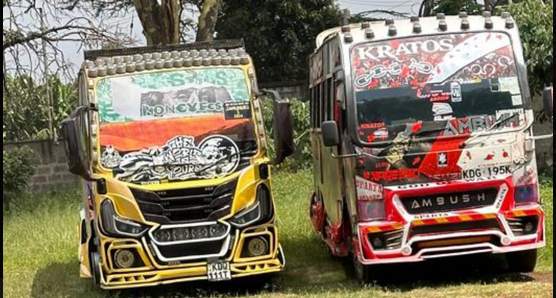
In a significant turn of events, the National Transport and Safety Authority (NTSA) in Kenya has taken decisive action by impounding matatus linked to George Ruto, the son of President William Ruto. This move comes after a series of public complaints regarding the operation of these vehicles, particularly the matatu known as “Moneyfest,” which has been at the center of controversy for flouting traffic rules.

Background

George Ruto has made headlines with his involvement in Nairobi’s vibrant matatu culture, owning some of the city’s most eye-catching vehicles. Moneyfest, known for its flamboyant design and high demand among passengers, has been operating on the Rongai route. However, its fame has been marred by allegations of operating without proper compliance with NTSA regulations, lacking valid insurance, and not being registered with any matatu Sacco, which is a regulatory requirement for public service vehicles in Kenya ().

The Impoundment

On January 9, NTSA confirmed that two matatus, including Moneyfest, were impounded following public outcry captured through viral videos showing the vehicles breaking traffic laws, such as driving on the wrong side of the road and passengers dangerously hanging out of the vehicle. This crackdown was not just a response to public pressure but also an attempt to enforce equal application of the law, regardless of political affiliations ().

The matatus were taken to a police station for processing, highlighting a shift in how authorities handle vehicles linked to influential figures. This action was celebrated by many on social media, with posts indicating relief that no one is above the law, even if they are related to the country’s highest officeholder ().

Public Reaction and Implications

The public’s reaction has been mixed but predominantly one of satisfaction, seeing this as a step towards accountability and equality before the law. Critics have long argued that vehicles owned by or linked to government officials often operate with impunity, a claim that seemed to hold until this impoundment. For instance, there were previous reports of traffic police officers being transferred after attempting to enforce regulations on vehicles allegedly owned by George Ruto or his associates ().

Moreover, this incident has sparked a broader discussion on the influence of political families in business sectors like transportation. There’s a growing demand for transparency and adherence to legal standards, especially in areas where public safety is at stake. The matatu sector, known for its cultural significance in Kenya, also faces scrutiny for how it’s regulated, particularly when high-profile individuals enter the fray ().

Looking Forward

This crackdown on George Ruto’s matatus might set a precedent for how regulatory bodies deal with similar cases in the future. It also underscores the power of public opinion and media in pushing for accountability. However, this event alone won’t resolve all issues within the matatu industry but signals a move towards ensuring compliance with safety and legal standards.

Conclusion

The impoundment of George Ruto’s matatus is more than just a regulatory action; it’s a narrative of privilege, public demand for justice, and the challenges of governance in intertwining personal business with political influence. As Nairobi continues to navigate its bustling streets, this incident reminds both officials and citizens of the importance of law enforcement and the need for an equitable application of regulations, irrespective of one’s background or connections.

Navigating the Contentious Terrain of Taxation on Digital Creators in Kenya

In a move that has sent ripples through Kenya’s burgeoning digital content creation community, President William Ruto has recently proposed taxing content creators who benefit from monetization schemes on platforms like TikTok, YouTube, and Meta. While the intention might be to broaden the tax base and ensure equity in taxation, this proposal opens up a Pandora’s box of debate, touching on issues of fairness, economic growth, and the support system for digital innovation.

A Tax on Creativity or a Step Towards Equity?

President Ruto’s argument hinges on the principle of equity: if traditional income earners are taxed, why should those earning through digital means be exempt? His remarks at the Kenya Private Sector Alliance’s 20th Anniversary suggested that with the ability to earn up to KSh 1 million from these platforms, it’s only fair that content creators contribute to the national tax kitty. However, this perspective brushes over the nuances of the digital economy. Content creators often invest significantly in their craft — in equipment, time, and learning — before they see any returns, which are not always guaranteed.

The Double-Edged Sword of Taxation

Introducing a tax on content creators could have a dual impact. On one hand, it might legitimize the digital economy, encouraging creators to formally register their income sources, potentially leading to a more structured and recognized industry. On the other hand, this could stifle creativity at a grassroots level. Young creators, who are just starting out or those from economically disadvantaged backgrounds, might find the additional financial burden daunting, potentially deterring them from pursuing content creation as a viable career path.

The Growth of the Digital Economy

Kenya has been at the forefront of digital innovation in Africa, with content creators playing a pivotal role in this narrative. They not only entertain but also educate, inform, and connect communities. Taxing this sector could inadvertently slow down this growth at a time when countries are racing to develop their digital economies. Instead of taxing, there could be incentives for creators to grow their reach and impact, which in turn could lead to higher tax revenues through increased economic activity.

A Case for Support Over Taxation

Rather than imposing taxes, the government could explore supporting this sector through grants, training, and infrastructure. This would not only boost the creative industry but also ensure that Kenya remains competitive in the global digital landscape. Additionally, there’s a need for clarity on how these taxes would be collected, considering the complexities of international digital platforms and the potential for double taxation if not carefully managed.

Listening to the Creators

The reaction from the content creation community has been mixed, with some feeling this is an attack on their nascent industry, while others acknowledge the need for all to contribute to national development. However, the key here is dialogue. The government should engage with creators to understand their challenges and contributions to the economy. This could lead to a more tailored approach to taxation, perhaps with thresholds or exemptions for those earning below a certain amount, recognizing the investment and risk involved in content creation.

William Ruto’s Ambitious Pitch to Host the African Grammys

 
Kenya’s President William Ruto has taken a bold step into the global spotlight by announcing that the government has already invested Ksh500 million in a bid to host the African Grammys. This initiative, confirmed during a town hall meeting at the Kenyatta International Convention Centre (KICC), aims to position Kenya as a cultural hub and celebrate the rich musical heritage of Africa on an international stage.

The Vision Behind the Bid


President Ruto’s pitch is not merely about hosting an event but about fostering a burgeoning creative economy in Kenya. The president has articulated a vision where Kenya becomes the epicenter for African music, leveraging this high-profile event to drive investment, education, and recognition in the arts. The African Grammys would not only spotlight Kenyan and African artists but also stimulate tourism and economic growth through cultural festivals and related activities.


The Financial Commitment


The payment of Ksh500 million marks a significant financial commitment from the Kenyan government, demonstrating its serious intent to secure this opportunity. This investment has been channeled through the State Department of Creative Economy, emphasizing the government’s strategy to cultivate the creative sector. Critics and supporters alike have debated the allocation of such a substantial sum, questioning both the potential benefits and the risks involved. However, President Ruto has reassured the public that this is not just a speculative venture but a strategic move towards cultural and economic development.


Global Engagement and Partnerships


Ruto’s efforts extend beyond national borders. In September 2023, former Sports CS Ababu Namwamba visited the Grammy Awards headquarters in Los Angeles to discuss potential partnerships, which was part of a broader strategy to elevate Kenya’s music scene on the world stage. Furthermore, President Ruto has personally engaged with the leadership of the Recording Academy in California, advocating for Nairobi to host the Grammy Africa Academy headquarters, which would serve as a base for organizing and promoting the African Grammys.


Cultural Impact and Challenges


Hosting the African Grammys could significantly elevate the profile of Kenyan music and artists, encouraging cross-cultural exchanges and nurturing local talent. However, there are logistical, cultural, and infrastructural challenges to consider. Ensuring that the event aligns with the diverse musical expressions across Africa while maintaining the prestige associated with the Grammy brand will be key. Additionally, the infrastructure for such an event would need substantial upgrades or development, from venues to tech support, to meet international standards.


Public and Political Reaction


The announcement has sparked a range of reactions. While many in the creative community are hopeful, seeing this as a golden opportunity for African music to gain global recognition, others are skeptical about the return on investment, especially given Kenya’s ongoing economic challenges. Political analysts have also pointed out that this move could be seen as part of Ruto’s broader strategy to appeal to the youth and the creative sector, demographics that are increasingly influential in Kenyan politics.


Looking Forward


If Kenya’s bid to host the African Grammys is successful, it could mark a new era for the country’s cultural diplomacy and economic strategy. The event would not only be a recognition of African musical talent but also a catalyst for further investments in the arts, education, and tourism. However, the success of this venture will heavily depend on meticulous planning, transparent management of funds, and ensuring that the cultural authenticity of African music is preserved and celebrated.


In conclusion, President William Ruto’s pitch to host the African Grammys is a testament to his vision for a culturally rich and economically vibrant Kenya. While challenges abound, the potential benefits could herald a significant cultural renaissance for the continent, placing it firmly on the global entertainment map.

Ruto as Catalyst for Change: More Than Just Rhetoric

The presidential office is a potent symbol of power and influence. But beyond the pomp and circumstance, the true measure of a leader lies in their ability to translate promises into tangible change. While the road to transformation is fraught with challenges, several key strategies can guide President Ruto and his government in their pursuit of a better nation.

Vision

Firstly, a president must be a visionary. This means Ruto must set a clear, inspiring, and achievable agenda. It’s not enough to identify problems; solutions must be proposed and communicated with conviction. A compelling vision can galvanize public support and motivate the necessary actions.

Understanding

Secondly, effective leadership demands a deep understanding of the people. William Ruto must be attuned to the hopes, fears, and aspirations of the citizenry. This requires more than mere polling data; it demands empathy, active listening, and a genuine commitment to public service. By connecting with the people at a human level, a president can build trust and create a shared sense of purpose.

Team-building

Thirdly, a president must be a skilled builder of coalitions. Change rarely happens in isolation. It requires collaboration across diverse groups, including political opponents, business leaders, civil society organizations, and international partners. President Ruto must be adept at negotiation, compromise, and consensus-building to forge the alliances needed to drive progress.

Accountability

Fourthly, accountability is paramount. Ruto must be willing to be held accountable for his actions or inactions. This means transparency in governance, access to information, and a willingness to admit mistakes. By fostering a culture of accountability, a president can inspire confidence in the government and encourage citizen participation.

Advocacy

Lastly, a president must be a relentless advocate for their people. Whether it’s championing economic growth, improving education, protecting the environment, or promoting social justice, a president must be unwavering in their commitment to the public good. This requires courage, resilience, and a willingness to stand up for what is right, even in the face of opposition.

It is essential to recognize that change is a gradual process. Quick fixes and superficial solutions are often counterproductive. Sustainable progress requires patience, persistence, and a long-term perspective. A president who embodies these qualities is more likely to leave a lasting legacy.

Ultimately, the success of a president in driving change hinges on their ability to inspire, unite, and lead. By combining vision, empathy, coalition-building, accountability, and advocacy, a president can become a catalyst for positive transformation.

Ruto Orders The Release of Protestors From Prison

William Ruto has ordered the immediate release of individuals who were peacefully protesting in various parts of Nairobi yesterday.

In a national address today, President Ruto expressed condolences to the families who lost loved ones. He directed that those who were inadvertently caught in the events be released and charges against them dropped.

Regrettably, there were instances of excessive, unlawful, and harmful behavior during the demonstrations, resulting in numerous arrests and charges,

William stated.

I urge law enforcement agencies to swiftly release individuals who were innocently caught up and not involved in criminal activities, withdrawing any charges against them.

This decision aims to enable agencies to concentrate their efforts on investigating and prosecuting serious criminal offenders who exploited yesterday’s peaceful protests to vandalize both public and private property.

William Ruto Names the Remaining Cabinet Secretaries

President William Ruto last week named 10 Cabinet secretaries, with a promise to name additional nominees soon. Today he has done so, with a cabinet that includes some Azimio officials and 5 CSes recycled from the previously dismissed Cabinet. The additional nominees are:

1. NATIONAL TREASURY & ECONOMIC PLANNING – John Mbadi
2. INVESTMENTS, TRADE & INDUSTRY – Salim Mvurya
3. TOURISM & WILDLIFE – Rebecca Miano
4. ENERGY & PETROLEUM – James Opiyo Wandayi
5. YOUTH AFFAIRS, CREATIVE ECONOMY & SPORTS – Onesmus Kipchumba Murkomen
6. MINING, BLUE ECONOMY & MARITIME AFFAIRS – Hassan Joho
7. LABOUR & SOCIAL PROTECTION – Dr. Alfred Mutua
8. COOPERATIVES, MSMEs & DEVELOPMENT – Wyckliffe Oparanya
9. PUBLIC SERVICE & HUMAN CAPITAL DEVELOPMENT – Justin Muturi
10. GENDER, CULTURE, ARTS & HERITAGE – Stella Lang’at

List of the New Kenyan Cabinet Secretaries

After the Finance Bill protests, one of Ruto’s measures to appease the public was to sack his entire cabinet. He has today proceeded to name 11 new cabinet secretaries as a “first batch” as he awaits to fill the other 11 positions remaining. Here are the names he has proposed:

  1. Ministry of Interior and National Administration – Professor Kithuri Kindiki
  2. Ministry of Health – Dr. Debra Mlongo Barasa
  3. Ministry of Lands, Public Works, Housing and Urban Development – Alice Wahome
  4. Ministry of Education – Julius Migosi Ogamba
  5. Ministry of Defence – Aden Duale
  6. Ministry of Agriculture – Dr. Andrew Mwihia Karanja
  7. Ministry of Environment – Roselinda Soipan Tuiya
  8. Ministry of Water – Eric Murithi Munga
  9. Ministry of Roads and Transport – Davis Chirchir
  10. Ministry of Information, Communication and Digital Economy – Dr. Margaret Nyambura Ndung’u
  11. Attorney General – Rebecca Miano


Consultations continue on the balance of the cabinet to be completed shortly.


The solution to Kenya’s debt and tax problems

We have had a contentious finance bill which has been violently opposed by Kenyans in yesterday’s protests. In a previous post, I proposed that the root cause of the problem is devolution. You can read that post here:


Ruto is not the problem


The basic fact is that we can’t afford to sustain this large government we currently have. To give you some basic figures, our current tax revenue annually is 1.4 trillion, while the annual government spending is 3.2 trillion. Since figures in the trillions are not very relatable, let’s cut off some zeros. Imagine a man named Ondiek had an income of 14,000KSh, but his monthly spending was 32,000KSh. How would Ondiek survive? He would have to become a loyal customer of loan apps to make up the difference!

This is the exact same thing the government is trying to do on a larger scale. We have this massive government after devolution and it needs a hell of a lot of money to be sustained. Therefore the government has to take loans, and to pay back those loans, they have to keep increasing taxes.

Now let’s go back to Ondiek. If he was to decide to get out of that debt trap, he would have two options: to either find a new job that pays him at least 32,000KSh, or he would have to cut back on his expenditures to fit his 14,000KSh salary. These are also the two options the Kenya government has: to either find new industries that can generate tax revenue, or to cut back on expenses.

Increasing revenue vs cutting back costs

Let’s look at the first option: finding new industries to generate tax revenue. In the last 10 years the new industry that has boomed in Kenya was betting. The Kenya government has already taxed this sector to near death and still the tax revenue can’t match the government spending. We also had discovery of oil in the Northern region which would have been massive for tax revenue, but that has amounted to nothing.

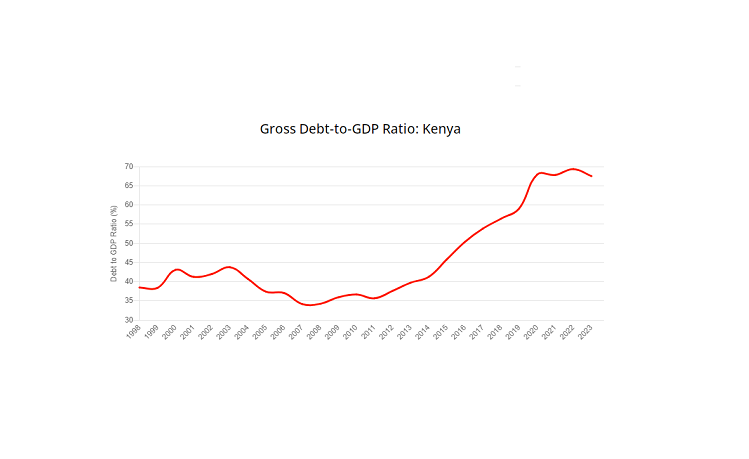
Therefore the only option we are left with is cutting back on expenses. For me I propose drastic cutbacks, where we even consider a referendum to take us back to the 8 province system. When you look at Kenya’s debt chart, that is we could comfortably afford

We have tried the devolution system for 11 years now. It is time to admit that, while it was a good idea in theory, it hasn’t worked in practice. We simply can’t bear the amount of tax it takes to sustain the devolved government and we need to roll back to the province system which wasn’t straining us so much as a country.

Ruto is not the problem

With the anger over the recent finance bill, it is tempting to look for individuals to put the blame on. For some people, they want to put the blame on Ruto. For others, they want to look for the culprit who planned the Finance bill protests. To politicize this issue would be a mistake as there is no one individual responsible for the mess we find ourselves in.

The issue at hand is that the Kenyan government is deeply in debt, and they are now trying to overtax us to repay those debts. Therefore the pertinent question must be:

What is driving us into debt?

To explain that, let us use this chart of Kenya’s debt to GDP ratio


As you can see, the Kenyan government’s debt started shooting up at some time in 2013. We can all agree that people get debt to spend more on something. So what is it that Kenya needed to spend more on starting in 2013?


The new, devolved government


That is the culprit behind the increased debt. That is the reason the government needs to borrow and overtax people.


Since devolution came into force in 2013, the government went from 8 provinces to 47 counties. From 10 ministries to 21. From 262 parastatals to 349. From 188 MPs to 349. Introduced entirely new categories of the senate, women reps etc. We all know how salaries have been rising in every group mentioned. That’s nearly double the spending or more in every major sector of government. All of these new positions created each want a substantial budget for their operations and also to line their personal pockets through corruption. The government simply cannot afford all these government expenditures right now, therefore they have to borrow and increase taxes to manage the costs.

The bloated size of the government is what led to the Finance Bill. Not Ruto. Any person you put in the presidency will be faced with the same dilemma of looking for money to sustain this inflated government. I will propose a solution in a later post.

Ruto: Explanation for selecting Gachagua as my deputy

On Sunday, President William Ruto revisited the rationale behind his choice of Deputy President Rigathi Gachagua as his running mate for the 2022 General Elections, speaking at Nakuru Boys High School during the Akorino Annual Prayer Conference. Ruto explained that despite recommendations from a caucus suggesting younger candidates, he opted for Gachagua because they shared the same age and believed they could work together effectively.

CHECK OUT:

Risper Faith Opens Up About Weight Loss Journey (Video)

He reiterated his commitment to mentoring young leaders, emphasizing that selecting Gachagua was part of his strategy to fulfill this promise. Ruto stressed the importance of unity and condemned tribal politics, affirming that Kenya should not engage in such divisive practices. He also highlighted Kenya’s role in supporting peace efforts in countries like Sudan, the Democratic Republic of Congo, and Haiti.

Ruto thanked Nakuru residents for rejecting tribalism and supporting Kenya Kwanza in the previous election. He announced the imminent resumption of the Itare Dam construction and plans for a one-gigawatt data center in Naivasha, in collaboration with various partners.

ALSO CHECK OUT:

President William Ruto Addresses The Recent Mūgūka Ban

Deputy President Rigathi Gachagua echoed Ruto’s sentiments on national unity and pledged to support the country’s economic transformation. Nakuru Governor Susan Kihika emphasized the need for unity among leaders to facilitate effective service delivery, while Tharaka-Nithi Governor Muthomi Njuki called for equitable revenue sharing and unity for peace and development.

Cabinet Secretaries Zachary Njeru (Water and Irrigation), Moses Kuria (Public Service), and several MPs also attended the event.

Gachagua Praises Ruto After His US Trip

Deputy President Rigathi Gachagua has showered Ruto with praises after he landed back to the country from his US trip days ago.

Gachagua started off by praising Ruto for his exquisite English that he exhibited while at the states.

“Allow me to tell you just a little about your successful trip in the United States. Kenyans are very proud of the way you presented us in that great country. Your speech. Hiyo kizungu likua sawa kabisa. And Kenyans were very happy that you put Kenya on the world map and the gains that you negotiated for the country.” Gachagua stated.

Read also;

Khalif Kairo Hangs Out With Rwandese Hottie Just Days After Breaking Up With Cera Imani

Ruto Grabs Attention

Apart from Gachagua stating the positive side, he also admonished Ruto to avoid holding hands with his wife while at public functions.

“Your excellency, allow me as a truthful man to tell you, there was some little challenge, rising from your trip to most of us here, all Kenyans were monitoring what you were doing in the states…
There was something that you were doing here that created problems for many husbands across the country. When you were walking there holding the hand of the first lady, it put us back here under a lot of pressure. Our spouses, led by mine, pst. Dorcas, were demanding we emulate the president and hold their hand. But the matter is now sorted; that was an American thing.”

Apart from that, Ruto also clarified that his trip was not hefty as many netizens thought. He claimed to have spent less than 10 million. But his statement remains a doubt to numerous citizens.


Ruto intends to increase taxes from 14 to 22 percent by the conclusion of 2024

President William Ruto has justified the government’s decision to implement additional taxes on Kenyans, asserting that it’s imperative for steering the country away from debt.

“I refuse to lead a nation in financial ruin; I refuse to lead a nation drowning in debt. We must tighten our belts,” Ruto affirmed.

He outlined plans to increase the country’s average tax rate from 14 percent to 16 percent by the close of 2024, aiming for a range between 20 and 22 percent by the end of his tenure.

“My goal is to elevate Kenya; this year, we’re targeting 16 percent. I aspire, with the grace of God, to leave it at 20 to 22 percent during my tenure,” Ruto asserted.

“It will be challenging; I’ll have to explain a lot, and there will be grievances, but I believe people will ultimately understand. We must learn to live within our means.”

Ruto delivered these remarks during discussions with Harvard Business School students on Africa’s trade and investment potential on Tuesday.

His comments come shortly after the unveiling of the proposed Finance Bill 2024.

Published on May 9, the Finance Bill, 2024 is slated for public participation thereafter.

The bill encompasses tax proposals aimed at bolstering revenue to fund the government’s ambitious projects.

One notable proposal is the introduction of a Motor Vehicle Tax, set at 2.5 percent of the vehicle’s value.

The minimum tax payable per vehicle upon insurance cover issuance is proposed at Sh5,000, with a maximum cap of Sh100,000.

Calculation of the tax will be based on factors such as make, model, engine capacity, and year of manufacture, as outlined in the bill.

President Ruto Replaces Ogolla With Key Promotions & Appointments

In a move to bolster the Kenyan military’s capabilities, President Ruto, the Commander-in-Chief of the Defence Forces, has announced a series of promotions and appointments effective May 2nd, 2024.

New Chief of Defence Forces

Lieutenant General Charles Muriu Kahariri takes the helm as the new Chief of Defence Forces, filling the vacancy left by the late General Francis Ogolla.

Strengthening Top Leadership

Major General John Mugaraival Omonda assumes the role of Vice Chief of Defence Forces, leveraging his experience leading the Kenya Air Force.

First Female Air Force Commander:

Major General Fatuma Gaiti Ahmed makes history as Kenya’s first female Major General and takes command of the Kenya Air Force.

Additional Leadership Changes:

Major General Paul Owuor Otieno is appointed Commander of the Kenya Navy.

Major General Thomas Njoroge Ng’ang’a takes on a new role as Deputy Vice Chancellor of Administration and Finance at the National Defence University.

Promotions to Major General include Brigadier Peter Nyamu Gitihinji (Air National Defence College Senior Directing Staff), Jattani Kampare Gula (Kenya Meat Commission Managing Director), and George Okumu (Kenya Ordnance Factories Corporation and Food Processing Factory leader).

Brigadier Samuel Kosgei Kipkorir is appointed Deputy Commander of the Kenya Air Force.

Strategic Reorganisation:

These changes, recommended by the Defence Council led by Cabinet Secretary Aden Bare Duale, aim to optimize leadership within the Kenya Defence Forces and enhance national security preparedness.